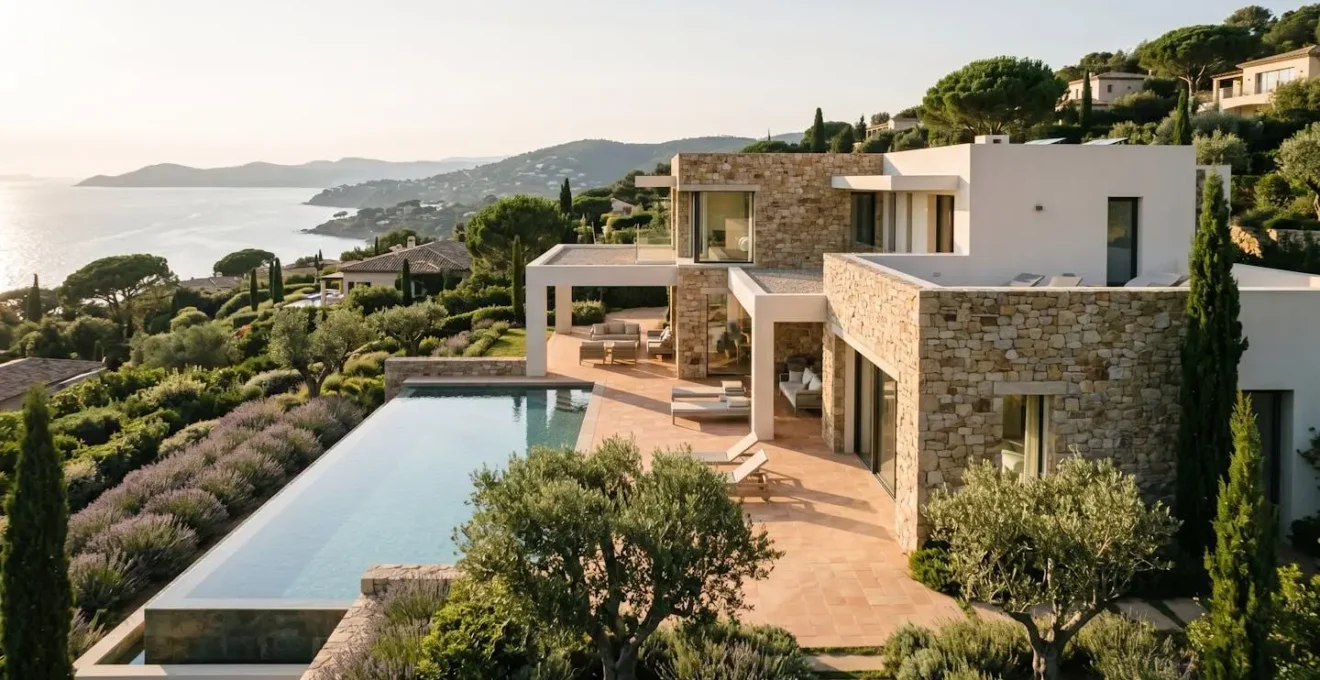
The Ramatuelle villa rental market operates on different principles than conventional luxury accommodation. Where hotels standardize service delivery across hundreds of guests, high-end villa rentals customize operational infrastructure around individual household needs. The distinguishing factor lies in how property caliber and service coordination merge to create residential autonomy with hotel-level support systems.
Operators with multi-decade French Riviera presence have developed selection methodologies that filter villa inventory by architectural standards, territorial positioning, and service compatibility. The result transforms temporary accommodation into a curated residence experience—one where square footage, guest capacity configurations, and concierge operational structure determine value delivery rather than brand recognition alone.
Your villa rental intelligence snapshot
- Ramatuelle villas span 255-600m² for 10-14 guests, from waterfront estates to traditional bastides
- Service infrastructure uses 4-pillar coordination (gastronomy, wellness, experiences, activities) vs ad-hoc requests
- Territorial positioning combines Saint-Tropez proximity with peninsula privacy, commanding market premiums over alternative locations
- Operational rhythm balances residential autonomy with coordinated service touchpoints—distinct protocols from hotel models
- Decision framework for villa vs luxury hotel occupancy centers on customization scope, space-per-guest ratios, and autonomy preferences
Property caliber and architectural standards in Ramatuelle’s villa market
High-end villa rental begins with inventory curation. Operators working across the Saint-Tropez peninsula apply selection criteria that extend beyond superficial amenity checklists into structural property evaluation—square footage adequacy for stated guest capacity, architectural coherence with regional context, and service infrastructure compatibility.
Ramatuelle’s premium villa inventory demonstrates measurable diversity. Properties range from 255m² to 600m² with guest configurations calibrated for 10-14 occupants. The lower boundary typically represents intimate waterfront estates where coastal positioning commands premium rates despite compact footprints. The upper range encompasses traditional Provençal bastides—multi-bedroom family compounds where interior volume and landscaped grounds compensate for non-waterfront locations.
This architectural split creates distinct value propositions. Waterfront villas prioritize territorial exclusivity and Mediterranean access, accepting tighter dimensions for coastal positioning. Bastide-style properties leverage regional architecture and expansive grounds, offering space advantages for larger family groups. Selection methodology must align property characteristics with guest usage patterns—miscalibration undermines the value equation.
-
Property size range: 255m² to 600m² interior square footage with corresponding outdoor terrace and pool deck allocations
-
Guest capacity configurations: 10-14 occupants based on bedroom count (5-7 bedrooms typical) and communal space adequacy
-
Architectural categories: Contemporary waterfront estates with direct coastal access vs traditional bastides with hillside vineyard positioning
-
Amenity infrastructure baseline: Infinity pools, outdoor kitchen facilities, climate-controlled wine storage, professional-grade entertainment systems
-
Service compatibility features: Commercial-standard kitchens enabling private chef operations, staff quarters for live-in household management, secure vehicle access for logistics coordination
The competitive advantage lies in matching property attributes to operational requirements. A villa marketed for 12 guests must deliver functional space for that capacity—not theoretical bedroom counts that force guests into inadequate communal areas. Operators with 20+ years of regional presence develop pattern recognition for these calibrations, filtering inventory that meets stated specifications without compromising livability standards.
Service infrastructure decoded: the concierge operations model
The phrase “concierge services” obscures operational complexity. High-end villa rental coordination involves structured service infrastructure rather than reactive request fulfillment. The difference determines whether guests experience seamless daily operations or friction-filled logistics.
Operators like villa-prestige-service.com structure concierge delivery around four operational pillars that organize service categories systematically. The SAVOUR pillar coordinates culinary requirements—private chef scheduling, provisioning for dietary specifications, restaurant reservation management across Saint-Tropez’s competitive dining landscape. RELAX addresses wellness infrastructure, from in-villa spa treatments to fitness instruction and recovery protocols. EXPLORE handles territorial experience curation—yacht charters, coastal excursions, cultural access to peninsula heritage sites. MOVE organizes activity coordination spanning watersports, golf access, and recreational logistics.

This operational architecture differs fundamentally from hotel concierge desks managing hundreds of simultaneous guest requests. Villa-specific coordination requires advance consultation to understand household composition, dietary restrictions, activity preferences, and schedule flexibility. The process begins weeks before arrival—not at check-in. Property managers function as residential coordinators rather than transactional service providers, developing customized operational plans that align service delivery with each household’s rhythm.
The global luxury concierge service market analysis projects the sector reaching USD 1,482 million by 2034, with individual private clients representing 42.3% of demand—confirming the primacy of bespoke personal service delivery that villa rental coordination exemplifies.
The team structure matters. Effective villa concierge operations involve dedicated coordinators who maintain vendor relationships across the peninsula—chef networks, maritime charter operators, wellness practitioners, and experience guides. These relationships enable priority access and quality control that individual guests cannot replicate through direct booking. A coordinator with 20+ years of Saint-Tropez market presence commands different vendor responsiveness than a guest attempting last-minute restaurant reservations during August peak season.
4
service pillars
The concierge architecture organizes coordination through four pillars—SAVOUR (gastronomy), RELAX (wellness), EXPLORE (experiences), and MOVE (activities)—built on 20+ years of French Riviera operational expertise.
Customization scope has practical limits. Concierge infrastructure excels at coordinating established networks—securing Michelin-starred chef availability, helicopter transfers, exclusive beach club access. Requests outside existing networks face longer lead times and uncertainty. Operational standards reflect what proven systems reliably deliver, not theoretical promises.
Ramatuelle’s territorial advantage within the Riviera hierarchy
Geographic positioning creates quantifiable value premiums in luxury real estate markets. Ramatuelle occupies specific coordinates within the French Riviera hierarchy that generate measurable territorial positioning advantages over alternative locations.
The peninsula geography establishes the foundational dynamic. As Saint-Tropez Tourisme official documentation confirms, Ramatuelle functions as a hillside village where vineyard terrain slopes directly toward Pampelonne beach—one of the Mediterranean’s most recognized coastal stretches. This topography creates sightline advantages and privacy elevation while maintaining 10-15 minute vehicle access to Saint-Tropez’s restaurant, retail, and marina infrastructure.
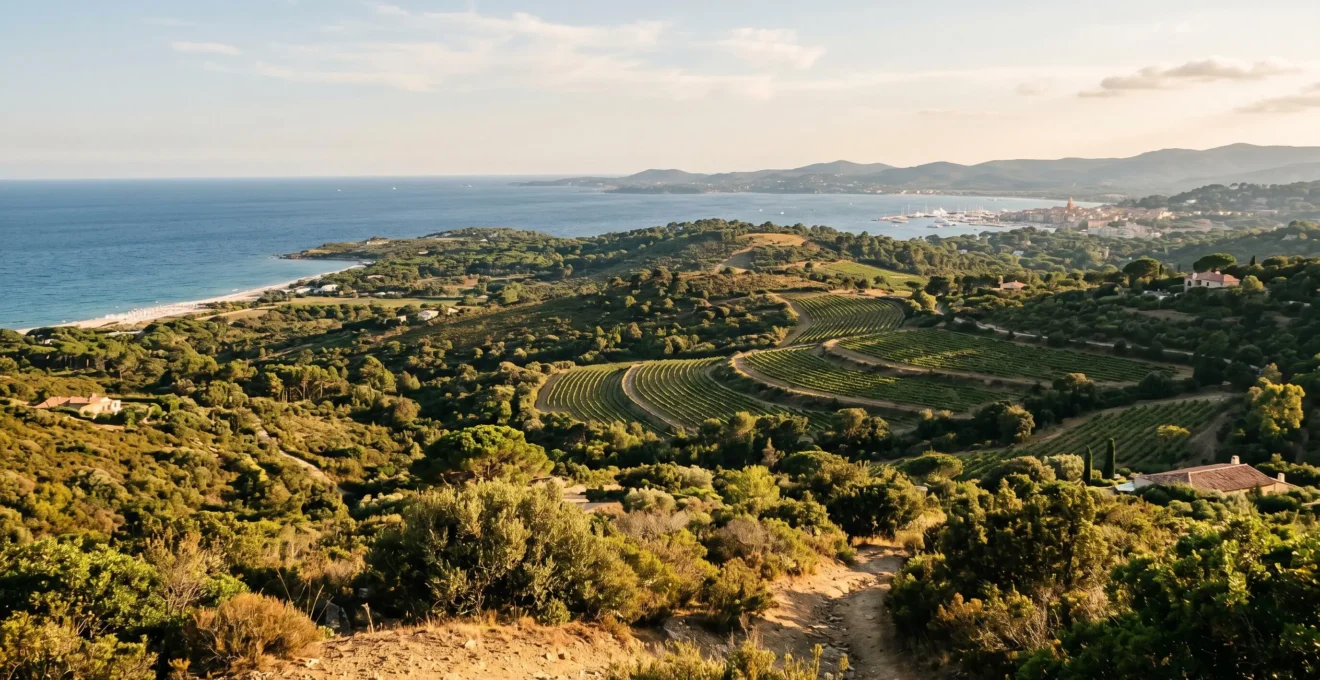
Market data quantifies the location premium. The Savills Côte d’Azur prime rental data measures Saint-Tropez peninsula properties at €15,000 to €45,000 per square meter—price points exceeding countryside locations by factors exceeding two-fold. This differential reflects territorial scarcity and the specific privacy-accessibility equilibrium that peninsula geography enables.
The competitive positioning becomes clear through comparative analysis. Saint-Tropez center properties maximize restaurant and nightlife proximity but sacrifice residential privacy and vehicle-free grounds. Cap Ferrat delivers ultimate coastal exclusivity but distances guests from Saint-Tropez’s service infrastructure. Cannes and Nice offer urban amenity density while forfeiting the secluded villa experience entirely. Ramatuelle occupies the synthesis position—close enough for daily Saint-Tropez access, distant enough for authentic residential seclusion.
This territorial calculus reflects deliberate geographic advantages rather than accidental prestige—Ramatuelle’s positioning delivers measurable value through the privacy-proximity equilibrium that peninsula geography uniquely enables.
The operational rhythm of high-end villa occupancy
Understanding villa rental value requires examining actual daily operations rather than theoretical amenity lists. The typical occupancy pattern reveals how service touchpoints, household autonomy, and staff interaction protocols create experiences distinct from luxury hotel models.
A representative day demonstrates the operational rhythm. Morning begins with household autonomy—guests control awakening schedules without hotel checkout pressures or breakfast service windows. Private chef coordination activates based on pre-arranged timing, typically preparing breakfast between 8:00-10:00 according to household preferences established during pre-arrival consultation. The chef operates independently in villa kitchen facilities, delivering plated service to outdoor terrace areas or interior dining spaces as specified.

Midday and afternoon hours emphasize operational autonomy. Guests control activity scheduling—pool use, beach excursions to Pampelonne, Saint-Tropez shopping—without coordinating through reception desks or adhering to facility booking systems. Concierge coordination occurs via direct communication channels (phone, messaging) for restaurant reservations or activity arrangements, but household movement remains entirely self-directed.
Evening service touchpoints resume with dinner preparation or restaurant departure logistics. Private chef service includes market provisioning, multi-course preparation, plated service, and post-meal kitchen restoration—guests experience restaurant-caliber dining without leaving villa grounds. Alternative evenings involve vehicle coordination to Saint-Tropez dining establishments, with concierge managing reservation confirmations and transportation timing.
The operational distinction from luxury hotels centers on service activation control and spatial autonomy. Hotel models impose structured meal times, shared facility access, and staff interaction during corridor transit or communal area use. Villa occupancy inverts this dynamic—service activates on guest initiative, all facilities remain private to the household, and staff presence occurs only during scheduled coordination windows. The following framework clarifies these differences across five operational dimensions, highlighting how villa rental inverts the traditional hospitality service model.
| Operational Factor | High-End Villa Rental | Luxury Hotel (5-Star) |
|---|---|---|
| Privacy level | Exclusive household occupancy, private grounds, no shared facilities or guest interaction | Shared public spaces (lobby, restaurants, pools), corridor transit, adjacent room occupancy |
| Service customization scope | Fully bespoke coordination (chef menus, activity curation, schedule flexibility) based on pre-arrival consultation | Menu selections from established offerings, activity booking from hotel partnerships, fixed meal service windows |
| Space per guest | 20-60m² per person (255-600m² villas for 10-14 guests) plus private outdoor areas | 4-8m² per person (40-80m² suites for 2-4 guests) with shared terrace/balcony access |
| Staff interaction protocols | Scheduled coordination windows (meals, housekeeping), guest-initiated contact for additional services | Continuous staff presence (front desk, restaurants, facilities), regular room service interaction |
| Autonomy/flexibility | Complete schedule autonomy, no checkout times, meal timing by household preference | Checkout deadlines, restaurant reservation requirements, facility booking systems |
Common inquiries addressed
What defines the booking timeline and deposit structure for high-end Ramatuelle villas?
Premium villa rental follows consultation-based booking rather than instant reservation systems. The process begins with household requirement assessment (guest count, dates, preferences), followed by curated property recommendations aligned with specifications. Deposit structures typically require 30-50% upon booking confirmation with balance settlement 60-90 days before arrival. Peak season (June-August) demands 6-12 month advance booking for optimal villa selection.
How do pricing structures separate base rental rates from concierge service costs?
Transparent operators distinguish villa rental rates from concierge coordination fees and variable service expenses. Base rental covers property access, standard amenities, and housekeeping. Concierge services bill separately—private chef fees reflect meal count and menu complexity, yacht charters price by vessel and duration, experience curation charges for guide services and venue access. This separation enables cost control through service selection rather than bundled packages obscuring individual components.
What limitations exist on service customization requests?
Concierge infrastructure excels within established vendor networks—Michelin-starred chef coordination, maritime charter arrangements, exclusive restaurant access, wellness practitioner scheduling. Requests requiring novel vendor sourcing or services outside proven networks face extended lead times and feasibility uncertainty. Advance notice (ideally 2-4 weeks minimum) improves accommodation probability for complex or unusual requirements. Same-day requests succeed only when aligning with existing coordination capacity.
Which season delivers optimal value for Ramatuelle villa rental?
May-June and September represent peak value windows—Mediterranean climate reliability without July-August premiums or crowds. July-August command highest rates due to guaranteed weather and Saint-Tropez social calendar intensity. April and October offer significant reductions (30-50% below peak) with acceptable weather for guests accepting occasional rainfall risk. November-March sees minimal activity due to restaurant closures and reduced service availability.
What minimum stay requirements apply to Ramatuelle’s premium villa inventory?
High-caliber properties enforce 7-night minimums during peak season (July-August) to optimize operational economics and reduce turnover friction. Shoulder seasons (May-June, September) often permit 5-night minimums. Off-peak periods may accommodate 3-4 night stays depending on property owner policies and booking calendar gaps. Weekend-only rentals (2-3 nights) remain uncommon in the luxury villa segment, though occasionally available during April or October for specific properties facing booking vacancies.