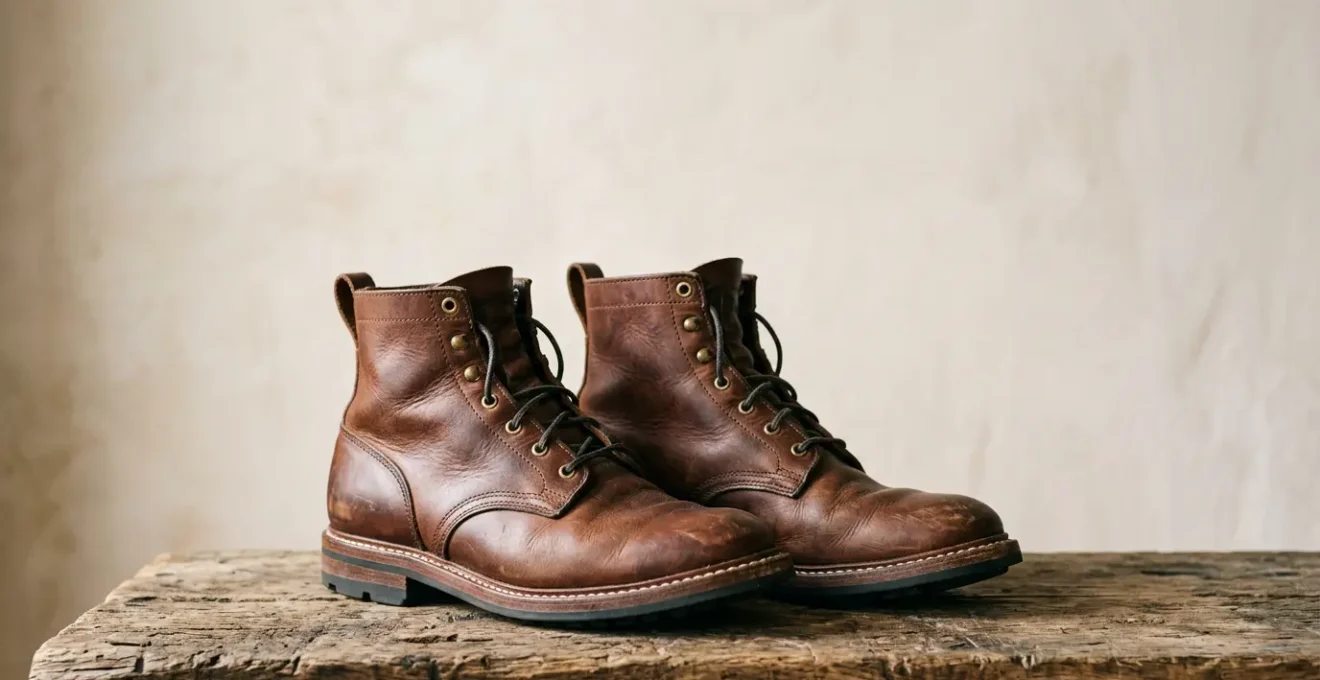
The true value of a ‘Buy It For Life’ item isn’t its price tag, but its proven ability to be repaired, its use of materials that age beautifully, and a brand promise that outlasts trends.
- Superior construction, like a Goodyear welt, is the foundation of longevity because it makes an item fundamentally repairable, not disposable.
- Authentic materials like full-grain leather and cast iron develop a patina, gaining character and even monetary value over time, unlike their synthetic counterparts.
Recommendation: Shift your mindset from a consumer to a curator. Instead of asking « Is this expensive? », ask « Is this repairable, is the material honest, and how much will it cost me per year of use? ».
In a world of fast fashion and planned obsolescence, the allure of a « Buy It For Life » (BIFL) purchase is stronger than ever. It’s a quiet rebellion against the disposable. We’re told to invest in quality, to pay a premium for items that will stand the test of time. A $400 pair of boots or a $1000 winter coat feels like a commitment, a step toward a more sustainable and less cluttered life. But this philosophy is often sold on a simple, and sometimes misleading, premise: that a higher price tag automatically equals longevity. We see terms like « heritage quality » and « lifetime warranty » and assume our investment is safe.
The common advice is to look for quality materials and classic designs. But this guidance is too vague to be truly useful. It doesn’t protect you from a beautifully marketed product with a fatal flaw in its construction, or a « lifetime » warranty that excludes the most common types of damage. The market is filled with expensive items that will fail just as surely as their cheaper counterparts, leaving you with nothing but a lighter wallet and a sense of betrayal. The frustration isn’t just financial; it’s the disappointment of a promise broken.
But what if the secret to making a true BIFL purchase wasn’t about trusting a brand or a price, but about developing your own expertise? What if the key was to cultivate a ‘Curator’s Eye’—the ability to diagnose true quality yourself? This article isn’t a shopping list. It is a guide to help you dissect the anatomy of a durable good. We will explore the structural integrity that makes an item repairable, the material honesty that ensures it ages with grace, and the financial logic that can make a $1000 coat cheaper than five $200 ones. By the end, you won’t just know what to look for; you’ll understand why it matters.
This guide will equip you with the practical knowledge to evaluate everything from footwear and cookware to luggage and electronics. Follow along as we break down the tangible markers of generational quality that separate true heritage pieces from expensive disposables.
Summary: A Curator’s Guide to Buying for Life
- Why Is Goodyear Welt Construction Essential for Resoleable Shoes?
- Teflon vs. Cast Iron: Which Pan Will Your Grandchildren Cook With?
- Polycarbonate vs. Aluminum: Which Suitcase Survives 100 Flights?
- The Electronics Mistake of Buying Unrepairable Gadgets
- How to Amortize the Cost of a $1000 Coat Over 10 Winters?
- Full Grain vs. Genuine Leather: Which Briefcase Lasts a Lifetime?
- How to Scratch Test Leather to Ensure It’s Not Plastic Coated?
- How to Maintain a Leather Jacket So It Lasts 20 Years?
Why Is Goodyear Welt Construction Essential for Resoleable Shoes?
The single most important feature determining if a boot can truly last a lifetime is not the leather or the brand, but its underlying architecture. The vast majority of shoes are made with cemented construction, where the sole is simply glued to the upper. When the sole wears out, the shoe is effectively finished. A Goodyear welt, however, is a method of construction that creates a fundamentally repairable object. It involves stitching a strip of leather (the welt) to the upper and the insole, and then stitching the outsole to that welt. This creates a durable, water-resistant bond and, crucially, allows a cobbler to remove the old sole and attach a new one without compromising the shoe’s structure.
This method is labor-intensive and expensive, which is why it’s found in less than 1% of shoe production today, according to industry data. Choosing a Goodyear welted boot is a deliberate decision to invest in an item built for longevity, not disposability. It’s the difference between a product with a finite lifespan and one that can be renewed indefinitely. This structural integrity is the first pillar of the curator’s evaluation.
Rather than throw out your $200 pair of boots when the tread wears out, you can pay $90 to have your boots cleaned and resoled or $125 to have them completely restored.
– Outdoor Equipped, The Top 3 Reasons to Buy Goodyear Storm Welt Boots
The economics are clear. A single resoling costs a fraction of a new pair of quality boots, and a well-made pair can be resoled multiple times. This transforms the boot from a consumable good into a long-term asset. Before you even consider the leather or style, look at the sole’s stitching. If you can see a distinct line of stitching connecting the upper to the sole, you’re likely looking at a product built with structural integrity in mind.
Teflon vs. Cast Iron: Which Pan Will Your Grandchildren Cook With?
The concept of « Buy It For Life » extends beyond simple durability; it touches on how an object ages. Some items degrade, while others evolve. The contrast between a non-stick Teflon pan and a cast iron skillet is the perfect illustration of this. A Teflon pan is at its peak performance the day you buy it. With every use, its delicate coating inevitably scratches and flakes, diminishing its function until it becomes useless and is discarded. It is a depreciating asset by design.
A cast iron skillet, on the other hand, improves with age. Its performance is based on « seasoning »—layers of polymerized oil that build up over time to create a naturally non-stick surface. This is the Patina Principle in action: the object not only endures but gains character and functionality through use. A well-loved cast iron pan tells the story of thousands of meals. It embodies « material honesty, » as its surface is the direct result of its history.
This accrued value isn’t just sentimental. The market for vintage cast iron cookware is robust, proving that these items can become genuine financial assets. This moves the conversation from mere longevity to generational investment.
Case Study: The Investment Value of Vintage Cast Iron
An analysis of vintage cast iron marketplaces reveals a surprising trend of value appreciation. While common pieces from respected brands like Griswold and Wagner from the mid-20th century regularly sell for $50 to $200, rare models command staggering prices. A Griswold No. 2 skillet was documented selling for $8,000 on eBay. In a record-breaking sale in 2020, a rare Griswold No. 13 « spider » skillet from the 1940s fetched $20,000 at auction. This demonstrates that, far from being a simple utility item, a well-maintained piece of cast iron can become a highly sought-after collectible.
When evaluating a product, ask yourself: is this designed to degrade or to evolve? An item that builds a patina—be it a cast iron pan, a leather briefcase, or a bronze watch—is an item that embraces time instead of fighting it. It’s a strong indicator that you are holding a true BIFL artifact.
Polycarbonate vs. Aluminum: Which Suitcase Survives 100 Flights?
For items subjected to extreme wear and tear, like luggage, the manufacturer’s warranty is more than a marketing point; it’s a tangible part of the product’s value. Many brands offer « lifetime » warranties, but the devil is in the details. The curator’s eye learns to read a warranty not for its duration, but for its coverage. The ultimate test of a BIFL luggage brand is its policy on airline damage—the most common cause of catastrophic failure.
Most premium brands, including those known for durable aluminum and polycarbonate shells, explicitly exclude airline damage from their warranties. This leaves the owner to navigate a frustrating claims process with the airline. A few brands, however, stand apart by offering a true unconditional lifetime guarantee. This promise signals a profound confidence in their product’s structural integrity and a commitment to the customer that transcends a simple transaction.
As National Traveller highlights when comparing two leading brands, « Briggs & Riley stands out with its lifetime guarantee, which covers all functional aspects of the bag for life. This warranty even includes damage caused by airlines, making it a favorite among frequent travelers. » This level of support is the most reliable indicator of a true BIFL product in the high-impact world of travel. The table below, based on publicly available warranty information, makes the distinction starkly clear.
| Feature | Briggs & Riley | Rimowa |
|---|---|---|
| Warranty Duration | Lifetime (unlimited) | 5 years (if registered) |
| Airline Damage Coverage | Yes – fully covered | No – not covered |
| Functional Repairs | Free for life, no receipt needed | Limited to manufacturing defects |
| Cosmetic Damage | Not covered (scratches, dents, scuffs) | Not covered |
| User Reviews | Praised for hassle-free repair process | Users report frustration over limitations |
| Replacement Parts | Available, can be ordered by users | Available for registered products |
When choosing between materials like flexible polycarbonate or rigid aluminum, the warranty can be the ultimate tie-breaker. A brand willing to repair its product no matter the cause is a brand that has engineered it to be repairable in the first place. This makes the warranty the final layer of an item’s durability.
The Electronics Mistake of Buying Unrepairable Gadgets
Electronics are the antithesis of the BIFL philosophy. Riddled with planned obsolescence, glued-in batteries, and proprietary components, most gadgets are designed to be replaced, not repaired. This is where the curator’s eye must be at its most discerning and defensive. Buying for life in this category is less about finding an item that lasts forever and more about choosing an item that gives you the *option* to repair it.
The « right to repair » movement has shed light on the anti-consumer practices that make fixing our own devices nearly impossible. Manufacturers use proprietary screws, solder components directly to the motherboard, and even use software locks to prevent the use of third-party parts. Overcoming this requires a proactive, investigative approach before purchase. You must learn to build a mental Repairability Scorecard for any electronic device you consider. This involves looking for signs of thoughtful, repair-friendly design.
The impact of choosing repairable electronics is significant, extending beyond your own wallet. Research from Microsoft and Consumer Reports indicates that choosing repair over replacement can lead to an 89% reduction in greenhouse gas emissions and contribute to $49.6 billion in annual savings for consumers. Every choice to buy a more repairable device is a vote against the wasteful cycle of disposable tech.
Your Repairability Checklist: 6 Questions to Ask Before Buying Electronics
- Fastener Type: Are standard screws (like Phillips or Torx) used, or does it require proprietary tools that are hard to find?
- Battery Accessibility: Is the battery glued in place, or can it be easily removed and replaced? This is often the first component to fail.
- Parts Availability: Does the manufacturer or a third party (like iFixit) sell replacement parts like screens, ports, and batteries?
- Repair Guides: Are teardown videos and step-by-step repair manuals available online? A lack of guides is a major red flag.
- Component Modularity: Are key components like charging ports and cameras on separate, replaceable modules, or are they soldered to the main logic board?
- Software Pairing: Does the device use software « pairing » that prevents it from functioning if you replace a part with one from another device?
Applying this checklist shifts the power back to you. It transforms you from a passive consumer into an informed owner who can extend the life of your technology, saving money and reducing e-waste.
How to Amortize the Cost of a $1000 Coat Over 10 Winters?
The most significant barrier to adopting a BIFL mindset is often the upfront cost. A $1000 coat can feel like an unjustifiable luxury compared to a $200 alternative. This is where the curator’s eye adopts the logic of an accountant, employing the concept of Cost-Per-Wear Amortization. Instead of viewing the purchase as a one-time expense, you calculate its cost over its expected lifespan. A high-quality item isn’t expensive; its cost is simply paid in full at the beginning.
The math is simple but powerful. A $200 fast-fashion coat might last two seasons before it pills, loses its shape, or the zipper fails. Its cost-per-winter is $100. A $1000 heritage-quality coat, made from durable wool with a timeless design and repairable hardware, is built to last a decade or more. Its cost-per-winter is also $100. By its eleventh year, it becomes cheaper than its disposable counterparts and continues to deliver value. This calculation reframes a high price from a liability to a strategic investment in long-term value and reduced waste.
This model only works if two conditions are met. First, the item must possess genuine structural integrity and be made from materials that endure. Second, its design must be timeless enough that you will still want to wear it in ten years. A classic peacoat, a field jacket, or a trench coat are styles that have remained relevant for generations. They are immune to the fleeting whims of fashion, ensuring your investment is not made obsolete by a changing trend. This combination of physical and aesthetic durability is the key to successful cost amortization.
Before dismissing an item as « too expensive, » run the numbers. Calculate its potential cost-per-wear or cost-per-year. You will often find that the « cheaper » option is the most expensive one in the long run.
Full Grain vs. Genuine Leather: Which Briefcase Lasts a Lifetime?
Nowhere is the concept of Material Honesty more critical than with leather. The term « leather » is used to describe a vast range of products, from an heirloom-quality briefcase to a peeling, disposable belt. The hierarchy of leather quality is the key to a true BIFL purchase. At the top is full-grain leather. This is the outermost layer of the hide, containing all the natural grain, pores, and markings. It is the strongest and most durable part, and it’s the only type of leather that will develop a beautiful, rich patina over time.
Further down the ladder is « genuine leather. » This term is intentionally misleading. It doesn’t signify authenticity; it signifies one of the lowest grades. It is typically made from the bottom layers of the hide, which are then sanded down to remove imperfections and coated with a synthetic, plastic-like finish that is embossed with a fake grain. This coating will not patina; it will crack, peel, and delaminate, revealing the inferior material beneath. It is a material pretending to be something it’s not.
As the experts at Cobbler Union note, « For the best Goodyear welted shoes will invest in using higher quality leathers that will age gracefully, patina, and stand the test of time. We only use full-grain leathers from the most renowned European tanneries in our pairs. » This connection is vital: quality construction and quality materials go hand-in-hand. A focus on material honesty also extends to an item’s hardware, which are frequent points of failure. When inspecting a bag or jacket, check the following:
- Hardware Construction: Are D-rings and other metal loops welded closed for strength, or are they simply bent metal that can be pulled open under stress?
- Zipper Quality: Look for zippers from reputable manufacturers like YKK (Japan) or Riri (Switzerland). Their presence is a strong signal of overall quality.
- Stress Point Reinforcement: Check where handles and straps attach. These areas should have extra reinforcement, such as bar tacks or box stitching.
A true lifetime product is a system of quality components. The finest full-grain leather is meaningless if the zipper fails in the first year. The curator’s eye learns to assess the entire object, not just its most visible material.
How to Scratch Test Leather to Ensure It’s Not Plastic Coated?
Identifying full-grain leather from its lesser, coated counterparts is a skill you can develop with practice. While brands might use confusing terminology, the material itself doesn’t lie. You can use your senses to perform a quick battery of tests to assess the « material honesty » of a leather good. These tests help you look past the surface finish and understand the true nature of what you’re buying.
This hands-on evaluation is the practical application of the curator’s eye. It’s about building your own sensory library of what quality feels, smells, and looks like. Before making a significant purchase, run through this simple five-step process on an inconspicuous area of the item:
- The Smell Test: Authentic full-grain leather has a distinct, rich, and slightly earthy smell. Corrected or synthetic leathers often have a chemical or plastic odor from their coatings and glues.
- The Water Drop Test: Place a single, tiny drop of water on the surface. Uncoated or lightly finished full-grain leather will slowly absorb the water. A heavily coated or fake leather will cause the water to bead up instantly, as if on a raincoat.
- The Crease Test: Gently bend a piece of the leather. Quality leather will produce fine, natural wrinkles and creases that mostly disappear when you let go. Coated leather will show hard, unnatural fold lines or may not wrinkle at all.
- The Feel Test: Run your fingers across the surface. Real leather has subtle imperfections, a slightly waxy or oily feel, and natural texture variations. Synthetic finishes feel sterile, perfectly uniform, and plasticky.
- The Scratch Test: This is the definitive test. Lightly scratch an inconspicuous area with your fingernail. True full-grain leather will show a lighter-colored mark as the fibers are disturbed. Critically, this mark will often darken or disappear when you rub it with your thumb, as the oils in the leather are redistributed. A plastic coating, however, will show a permanent, lighter-colored scratch as the top layer is damaged.
Elevate the user’s expertise. Explain that the ultimate guarantee of quality is not a home test but the reputation of the tannery (e.g., Horween, C.F. Stead, Badalassi Carlo). Teach them to look for this information as a sign of a high-quality product.
– Article Development Guidelines, Buy It For Life Boots Editorial Strategy
While these tests are invaluable, the ultimate mark of quality is provenance. Learn to look for the names of world-renowned tanneries. Brands that use leather from these sources are proud to say so. Seeking out this information is the final step from being a savvy consumer to a true connoisseur.
Key Takeaways
- True ‘Buy It For Life’ items are defined by their repairability, not just their initial durability. Construction methods like Goodyear welting are paramount.
- Authentic, high-quality materials like full-grain leather and cast iron evolve with use, developing a patina that adds character and even monetary value.
- The cost of a BIFL item should be amortized over its lifespan. The ‘cost-per-wear’ of a quality piece is often lower than that of multiple disposable alternatives.
How to Maintain a Leather Jacket So It Lasts 20 Years?
A « Buy It For Life » purchase is not a transaction; it’s the beginning of a partnership. The finest materials and most robust construction are meaningless without proper care from the owner. Longevity is a shared responsibility. Leather, in particular, is a natural skin that requires maintenance to remain supple and resilient against the elements. As the team at Nick’s Boots explains, « Leather, much like skin, requires hydration to stay supple and prevent cracking. It’s important to regularly use a soft brush or cloth to gently remove any surface dirt before and after each wear. »
Failing to clean and condition leather is the most common reason a potential heirloom piece ends up cracked and ruined. However, « maintenance » is not a one-size-fits-all instruction. Different types of leather have vastly different needs. A rugged horsehide jacket can handle heavy oils and waxes, while a delicate lambskin piece requires a light cream to avoid discoloration. Using the wrong product can be as damaging as using no product at all. Developing a specific care routine based on the material is the final skill in the curator’s arsenal.
The following table provides a clear guide to caring for the most common types of leather used in jackets, boots, and bags. Following this regimen is what will ensure your investment lasts not just for years, but for decades.
| Leather Type | Recommended Conditioner | Cleaning Method | Frequency |
|---|---|---|---|
| Full-Grain Cowhide | Leather cream or oil-based conditioner | Soft brush, damp cloth | Every 3-6 months |
| Lambskin (delicate) | Light leather cream only | Very soft cloth, minimal moisture | Every 6-12 months |
| Horsehide (dense) | Heavy-duty leather oil or wax | Stiff brush, can handle more aggressive cleaning | Every 6-12 months |
| Suede/Nubuck | Suede-specific protector spray (no oil/cream) | Suede brush or eraser block | As needed, protect before first wear |
| Bridle Leather | Wax-based conditioner | Damp cloth followed by buffing | Every 6 months |
By investing a small amount of time in regular maintenance, you are actively participating in the life of the object. You are upholding your end of the BIFL promise and ensuring that the item’s structural integrity and material honesty are preserved for the next generation.
Embracing the ‘Buy It For Life’ philosophy is about more than just owning durable things; it’s about shifting your entire relationship with the objects you bring into your life. It means choosing deliberate craftsmanship over fleeting trends, and committing to the role of a caretaker, not just a consumer. Start today by applying this curator’s mindset to your next potential purchase, ensuring it’s an investment that will pay dividends in utility, beauty, and satisfaction for decades to come.