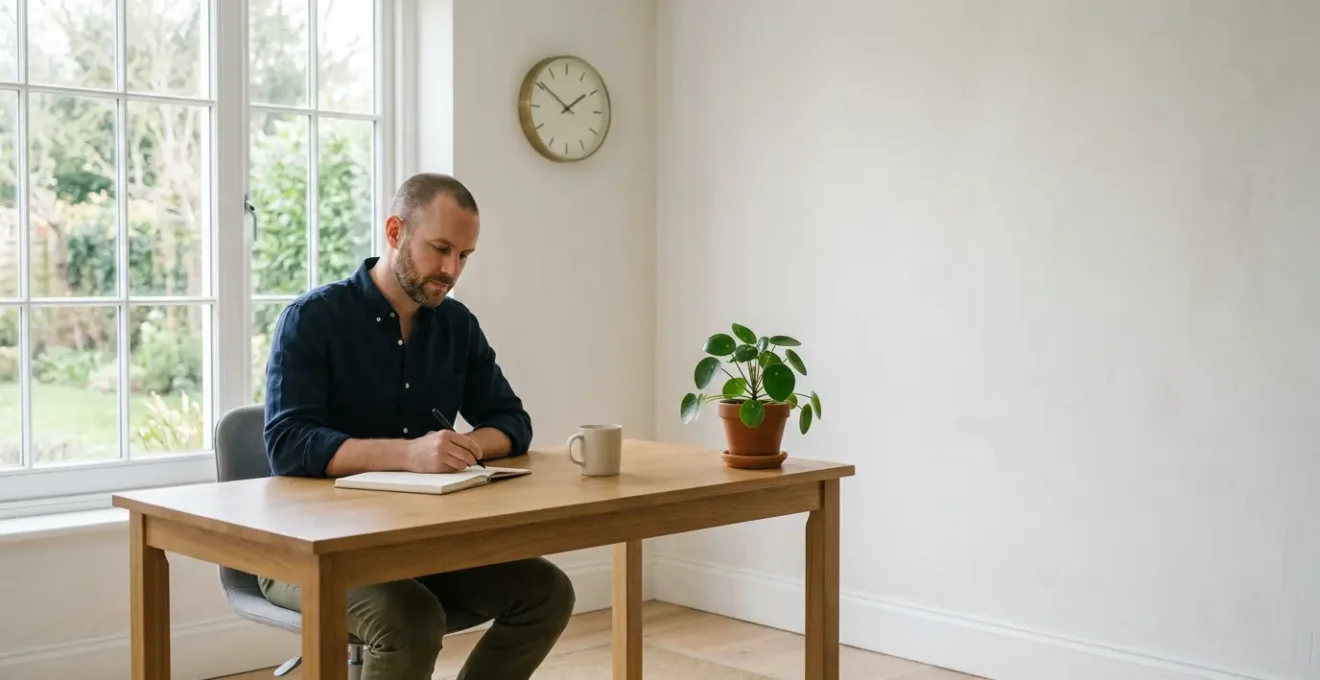
Contrary to the pervasive ‘grind’ culture, slowing down is not the enemy of productivity—it is its most potent ally. The key for a high-achiever is not to empty their schedule but to enrich their attention. This guide dismantles the myth that speed equals success, revealing how intentional, mindful presence in each task transforms busyness into fulfillment and unlocks a more profound, sustainable form of productivity.
You have checked all the boxes. The career is thriving, the goals are being met, yet a persistent hum of dissatisfaction remains. Life feels like a series of tasks to be completed, a race where the finish line keeps moving. You are productive, but you are not present. You are successful, but you feel hollow. This is the paradox of the modern high-achiever: a world of external accomplishment coupled with a profound internal emptiness, a feeling of being perpetually rushed even in moments of supposed rest.
The conventional advice offers little solace. We are told to optimize, to manage our time with more granular precision, to find new ‘hacks’ to squeeze more from every minute. But these solutions often add to the mental load, reinforcing the very mindset that causes the problem. They treat the symptom—a lack of time—while ignoring the root cause: a depleted quality of attention. They promise efficiency but deliver a more streamlined version of the same frantic pace, leaving you feeling even more disconnected from the life you are working so hard to build.
But what if the true path to sustainable productivity and genuine happiness lies not in doing more, but in *being* more? What if slowing down isn’t about sacrificing ambition, but about fueling it from a deeper, more resilient source? The secret is to shift your focus from the quantity of your output to the quality of your presence. It’s about transforming mundane daily activities—from your morning coffee to the way you organize your home—into anchors of mindfulness that ground you in the now. This is not about idleness; it is about intentionality.
This article will guide you through that philosophical shift. We will explore how to selectively disengage from the noise to reconnect with what truly matters. You will learn to cultivate an environment, both physical and mental, that fosters deep focus and joy, proving that a slower, more deliberate pace is the ultimate catalyst for a richer, more meaningful, and paradoxically, more productive life.
To navigate this journey from frantic doing to intentional being, this guide is structured to address the core pillars of a slower, more meaningful life. We will begin by redefining our relationship with opportunities and then move inward, transforming our homes, habits, and mindsets.
Summary: How to Slow Down and Deepen Your Productivity
- Why Saying ‘No’ to Good Opportunities Is the Key to Happiness?
- How to Declutter Your Home to Reduce Mental Noise?
- Fast Food vs. Slow Food: How Cooking Reconnects You with Life?
- The Social Media Comparison Trap That Steals Your Joy
- How to Turn Morning Coffee into a Grounding Ritual?
- The ‘Grindset’ Mindset Mistake That Leads to Loneliness
- Reading vs. Scrolling: Why Paper Books Relax the Brain Better?
- How to Meditate When You Are a Skeptic Who Can’t Sit Still?
Why Saying ‘No’ to Good Opportunities Is the Key to Happiness?
The high-achiever’s mantra is often an unwavering « yes. » Yes to the new project, yes to the networking event, yes to the extra responsibility. Each « yes » feels like a step forward, a validation of capability. Yet, this compulsive accumulation of commitments is a primary source of the frantic pace we seek to escape. The art of slowing down begins with the discipline of the selective « no. » It’s a recognition that your time and energy are finite, precious resources. Saying « no » to a good opportunity is not an act of failure; it is a strategic decision to say « yes » to something more important: your well-being, your focus, and your sanity.
This isn’t just a philosophical idea; it’s backed by a clear correlation between happiness and performance. A culture of over-commitment and constant pressure is taking its toll, as recent research shows that employee happiness has hit a four-year low. Conversely, research from Oxford University’s Saïd Business School found that workers are 13% more productive when happy. The crucial insight is that these happy workers don’t work more hours; they are simply more effective within the time they have. They achieve more because their work is fueled by positive emotion, not by the draining pressure of an overstuffed schedule.
Saying « no » creates the space necessary for this happiness to flourish. Every opportunity declined is a moment reclaimed for deep work, for rest, or for connection. It carves out the quiet necessary to hear your own thoughts above the clamor of external demands. This isn’t about turning down every chance for growth, but about evaluating each one against a new set of criteria: Does this align with my deepest values? Will it energize or deplete me? Does it serve my long-term vision or is it just a short-term distraction? By learning to say no, you trade the illusion of being everywhere for the profound power of being fully present where it counts.
How to Declutter Your Home to Reduce Mental Noise?
Our external environment is a direct reflection of our internal state. A cluttered home, a disorganized desk, or an overflowing wardrobe creates a constant, low-level visual static that contributes to mental noise. This « stuff » continuously vies for our attention, subtly reminding us of unfinished tasks, past decisions, and future obligations. To slow down your mind, you must first quiet your surroundings. Decluttering is not merely a chore; it is a powerful form of mindfulness, an act of curating your space to support a state of calm and focus. By intentionally removing what is unnecessary, you create physical and mental breathing room.
A perfect starting point is the closet, often a hotbed of decision fatigue. The concept of a capsule wardrobe is a practical application of slow living philosophy. It involves curating a small collection of versatile, high-quality items that you love and that work together seamlessly. This simple act eliminates the daily micro-stress of deciding what to wear, freeing up significant mental energy for more important matters. The process of creating one is an exercise in intentionality, forcing you to distinguish between what you truly need and what is simply occupying space. It’s about choosing quality over quantity and simplicity over excess.
The visual serenity of an organized closet, as seen here, translates directly into a calmer start to the day. This isn’t about stark minimalism for its own sake, but about creating an environment where every object has a purpose and a place. The tactile quality of well-chosen fabrics and the clean lines of an ordered space provide a sense of control and peace that extends far beyond your wardrobe. This principle can be applied to every room in your home: your bookshelf, your kitchen counters, and your digital desktop. Each item you discard is a decision you no longer have to make, a distraction you no longer have to process.
Your Action Plan: Auditing Your Environment for Mental Noise
- Identify Noise Points: List all physical and digital spaces that cause you stress or distraction (e.g., cluttered desk, messy inbox, overflowing closet, notification-heavy phone screen).
- Conduct an Inventory: For one chosen area, take stock of every item. For a closet, use the three-pile method: ‘love and wear’, ‘occasional’, ‘never wear’. For a digital space, list all apps and subscriptions.
- Align with Your Values: Confront each item. Does it serve a clear purpose? Does it bring you joy or utility? Is it aligned with the person you want to be, or is it a relic of the past?
- Measure Emotional Impact: Create a quick grid. For each item you’re unsure about, rate its « value » vs. its « mental cost. » A high-cost, low-value item is a prime candidate for removal.
- Create a System for Clarity: For the items you keep, establish a clear, simple organizational system. For what you discard, create a plan (donate, sell, delete) to achieve closure. Prioritize the area that will give you the quickest sense of peace.
Fast Food vs. Slow Food: How Cooking Reconnects You with Life?
In our relentless pursuit of efficiency, we have outsourced and accelerated one of life’s most fundamental rituals: eating. Fast food, delivery apps, and microwavable meals save us time, but at what cost? They sever the connection between ourselves, our food, and the natural rhythms of life. The « slow food » movement is not just about artisanal ingredients; it is a philosophy. It is the conscious act of reclaiming the process of cooking and eating as a form of grounding and presence. It’s an invitation to trade the fleeting convenience of a quick meal for the deep satisfaction of creating something with your own hands.
Cooking can be a powerful form of active meditation, especially when approached as an atelic activity—an act performed for its own sake, not for a future outcome. As you chop vegetables, stir a sauce, or knead dough, your focus shifts from the abstract worries of your day to the tangible, sensory experience of the present moment. This state of complete immersion is what psychologists call « flow. » It takes, on average, 10 to 15 minutes of focused effort to enter this state, which is why constantly switching tasks (like checking your phone while cooking) prevents it. In this state, time seems to melt away, and a deep sense of engagement and satisfaction emerges. A study on flow and productivity even found top executives were 500% more productive when in flow, demonstrating the immense power of this fully immersed mental state.
Mindful cooking reconnects you with the essence of life. It engages all your senses: the vibrant colors of fresh produce, the aroma of spices, the sound of sizzling, the texture of ingredients. This sensory engagement is a powerful antidote to the disembodied experience of digital life. You don’t need to prepare elaborate feasts. Even simple acts, like using a pressure cooker for a slow-cooked meal, allow you to balance a busy schedule with intentional preparation. The goal is to transform the act of nourishment from a task to be checked off into a ritual that replenishes not just your body, but your soul, reminding you that true sustenance comes from process, not just product.
The Social Media Comparison Trap That Steals Your Joy
Nothing accelerates our inner pace and depletes our sense of worth quite like the endless scroll. Social media platforms are engineered to be comparison machines, presenting a curated highlight reel of others’ successes, travels, and happiness. For a high-achiever, this can be particularly toxic. You are driven by progress and achievement, yet the feed provides an infinite, impossible standard to measure yourself against. This constant, often subconscious, comparison breeds a sense of inadequacy and urgency, fueling the feeling that you are always behind, never doing enough, and that your own accomplishments are somehow diminished.
This digital discontent has real-world consequences, bleeding into our professional lives and contributing to a widespread sense of disengagement. Gallup’s latest research reveals a staggering problem: low employee engagement costs the global economy an estimated US $8.9 trillion, equivalent to 9% of global GDP. This isn’t just about boring jobs; it’s about a workforce feeling disconnected and unfulfilled, a sentiment greatly exacerbated by the social pressure cooker of online life. When our personal time is spent measuring our lives against unrealistic benchmarks, it’s no surprise that we carry that sense of dissatisfaction into the workplace.
Breaking free from this trap requires a conscious, deliberate act of digital decluttering. This means curating your feed as ruthlessly as your closet, unfollowing accounts that trigger comparison and anxiety. It means setting firm boundaries, such as « no-scroll » periods, to create space for your own thoughts and experiences to breathe. The goal is to shift your use of these platforms from passive consumption to active, intentional connection. True joy is found not in observing the curated lives of others, but in being fully present in the uncurated, authentic moments of your own. The table below illustrates the stark contrast between factors that genuinely boost well-being and the negative loop of stress and burnout often fueled by comparison.
| Factor | Impact on Productivity | Statistical Evidence |
|---|---|---|
| Employee Happiness | Positive | +12% productivity increase per unit of happiness |
| Work-Related Stress | Negative | Over 40% report stress as ongoing problem |
| Recognition at Work | Positive | Only 52.1% satisfied with workplace recognition |
| Burnout | Negative | 43% of office workers currently feel burned out |
How to Turn Morning Coffee into a Grounding Ritual?
For many, the morning coffee is a frantic, utilitarian act: a desperate injection of caffeine to kickstart a brain already racing with the day’s to-do list. It’s often consumed while scrolling through emails or news headlines, a multitasking habit that starts the day with a divided mind. However, this simple daily moment holds the potential to become a powerful grounding ritual. By transforming the act of making and drinking coffee from a means to an end into a mindful practice, you can set a tone of calm, deliberate presence that resonates throughout your day. It’s the first opportunity to choose slowness over speed.
The key is to practice monotasking. Instead of rushing, dedicate the first 15 minutes of your morning to this single activity, with no screens allowed. This act of intentional friction—choosing a slightly slower method like a French press or pour-over instead of an instant machine—forces you to engage with the process. As the water heats and the coffee brews, focus on the sensory details. This practice is known as sensory grounding. Identify the distinct notes in the aroma. Feel the warmth of the mug in your hands. Notice the full, complex taste profile as you take the first sip. This isn’t about wasting time; it’s about investing it in your own mental clarity.
This image captures the essence of the ritual: the simple, intimate connection between person and process. It’s an oasis of calm before the day’s demands begin. By focusing all your attention on this one simple pleasure, you are training your brain to be present. You are making a conscious choice to start your day from a place of centeredness rather than chaos. This small, repeated act builds the mental muscle of mindfulness, making it easier to return to a state of calm when the inevitable stresses of the day arise. It’s a profound reminder that peace is not something you find, but something you create, one intentional moment at a time.
The ‘Grindset’ Mindset Mistake That Leads to Loneliness
The « grindset » or « hustle culture » glorifies relentless work as the sole path to success and self-worth. It champions sleepless nights, packed schedules, and the sacrifice of personal life on the altar of ambition. For a high-achiever, this mindset is both seductive and destructive. It validates the drive to succeed but frames rest, connection, and unstructured time as liabilities. The fundamental mistake of the grindset is its equation of busyness with importance and productivity with identity. This relentless focus on ‘doing’ inevitably leads to a profound sense of isolation. When your entire life is optimized for output, there is little room left for the spontaneous, inefficient, and deeply human moments of connection.
This isn’t just a feeling; it’s a global crisis with severe economic and personal costs. The World Health Organization reports that depression and anxiety, often exacerbated by burnout and social isolation, result in approximately 12 billion lost working days and cost the global economy around US $1 trillion in lost productivity each year. The grindset promises peak performance but often delivers the opposite: burnout, disengagement, and a decline in mental health that actively sabotages the very productivity it seeks to maximize. It creates a life that looks impressive on a resume but feels empty from the inside.
The antidote is to recognize that slowness and productivity are not enemies, but partners. True, sustainable productivity requires periods of deep rest and meaningful connection to refuel creativity and resilience. As one coach insightfully notes, a slower approach provides the tools for a more nourishing relationship with work.
Slowness + productivity are complementary, not oppositional. The Slow Movement provides tools to build a relationship with work that is deeply nourishing and has potential to build real meaning and purpose.
– Slow Folk Business Coach, Slow Living is Destroying Our Productivity
Embracing a slower pace is about dismantling the lonely throne of the hustle and re-engaging with the community, relationships, and personal interests that make a life rich and whole. It’s about understanding that your greatest asset isn’t your ability to work 80 hours a week, but your ability to be a present, balanced, and connected human being.
Reading vs. Scrolling: Why Paper Books Relax the Brain Better?
In the quiet moments of the day, we face a constant choice: to scroll or to read. While both can be forms of escape, they have profoundly different effects on our brains. Scrolling through a social media feed or news aggregator is an act of shallow engagement. It presents a rapid-fire stream of fragmented information, each piece designed to capture your attention for a fleeting moment before the next one appears. This trains the brain for distraction and instant gratification, keeping it in a state of low-grade alert and preventing it from entering a state of deep focus. It fragments our attention, leaving us feeling mentally scattered and vaguely anxious.
Reading a physical book, in contrast, is an exercise in deep, immersive focus. The linear, long-form nature of a book encourages a state of sustained concentration. Without hyperlinks, notifications, or pop-up ads, the brain is allowed to sink into the narrative or argument. This is closely related to, but distinct from, concepts high-achievers might be familiar with. While deep work is defined as the ability to focus without distraction on cognitively demanding tasks, reading for pleasure can induce a flow state—a more effortless mental state of complete immersion where you lose track of time. Both states are powerful antidotes to the fractured attention caused by scrolling.
The tactile experience of a paper book further enhances its relaxing properties. The physical act of turning a page, the weight of the book in your hands, and the scent of the paper all serve as sensory anchors, grounding you in the present moment and pulling you away from the disembodied digital world. Unlike a backlit screen, which can emit blue light that disrupts sleep patterns, a paper book is visually calming. Choosing to read a book is not a nostalgic act; it is a deliberate choice to cultivate a different quality of attention. It is a declaration that you value depth over breadth, and immersive focus over scattered distraction. It is a simple, powerful way to slow down your mind and nourish your intellect.
Key Takeaways
- Slowing down is not about reducing productivity, but about increasing the quality and intention of your attention.
- Transforming mundane tasks (like making coffee or decluttering) into mindful rituals is a practical way to ground yourself in the present.
- The ‘grindset’ is a trap that equates busyness with worth, often leading to burnout and loneliness; true productivity is sustainable and balanced.
How to Meditate When You Are a Skeptic Who Can’t Sit Still?
For the high-achiever whose mind is constantly racing, the advice to « just sit still and meditate » can feel like an impossible, even absurd, request. The idea of emptying your mind can be frustrating for someone who is used to actively solving problems. For the skeptic, traditional meditation can feel passive and unproductive. But mindfulness is not a one-size-fits-all practice. The goal is not necessarily to stop your thoughts, but to anchor your attention in the present moment. For those who can’t sit still, the solution is active meditation—finding a flow state through intentional, single-minded focus on a simple activity.
This is where the concept of « Monotasking Meditations » becomes a game-changer. Instead of trying to sit on a cushion, you can practice mindfulness while doing everyday tasks. When washing the dishes, focus entirely on the sensation of the warm water, the smell of the soap, and the texture of the sponge. When going for a walk, leave your phone behind and focus only on the rhythm of your footsteps and your breath. During a workout, dedicate your full attention to one set of exercises, feeling the specific muscle contractions and the cadence of your breathing. These activities become your meditation. They work because they give your restless mind a single, tangible point of focus, gently guiding it away from the chaotic whirlwind of future plans and past worries.
It’s important to approach this without the high-achiever’s need for control. You cannot force yourself into a flow state; this is known as the paradox of control. The more you try to force it, the more elusive it becomes. The key is to simply create the conditions for it to arise: remove distractions and focus on a single task. If you don’t feel « in the flow » today, that’s perfectly fine. The practice itself—the act of reducing distractions and dedicating focus—is what builds the muscle of concentration. It’s about finding stillness in motion, a form of meditation perfectly suited for the person who is always on the go. This is how the skeptic learns to meditate: not by forcing stillness, but by finding it in action.
The journey to a slower, more intentional pace begins not with a grand life overhaul, but with a single, conscious choice. It starts with the decision to transform your next cup of coffee into a ritual, or to say « no » to one small commitment that doesn’t truly serve you. Begin today by choosing one practice from this guide and applying it with full attention.