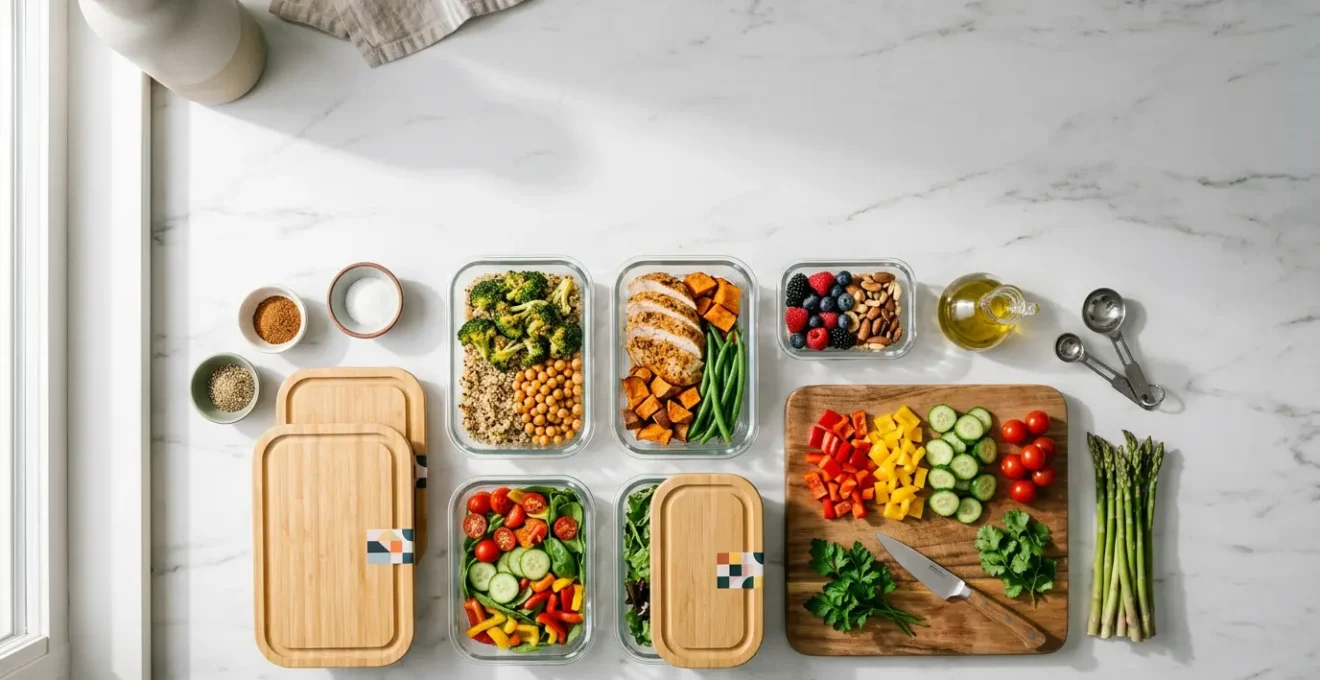
The key to sustainable meal prep isn’t complex recipes; it’s a « component cooking » system that lets you build high-performance meals in minutes.
- Prioritize protein and healthy fats over simple carbs to stabilize energy and eliminate the dreaded « 2 PM crash. »
- Prep versatile bases (proteins, veggies, grains) separately to create dozens of meal combinations and avoid flavor fatigue.
Recommendation: Audit your pantry once, then use this system to turn a 2-hour Sunday task into a week of effortless energy and focus.
It’s Sunday evening. The dread sets in. Another week of long hours looms, and the last thing you want to think about is what you’re going to eat. The siren song of takeout apps is already playing in your head. You know it’s a trap—expensive, unhealthy, and the guaranteed cause of that productivity-killing brain fog that hits you around 2 PM. You’ve seen the meal prep posts online: an intimidating sea of identical plastic containers filled with bland chicken, rice, and broccoli. It looks like a one-way ticket to culinary boredom, and frankly, you hate spending time in the kitchen.
Most meal prep guides fail because they treat you like a wannabe chef. They assume you want to spend your entire Sunday juggling five different complex recipes. But what if the solution wasn’t about cooking more, but cooking smarter? What if you approached your kitchen not as a chef, but as an engineer building an efficient system? This isn’t about just saving time; it’s about taking active control of your metabolism for sustained energy and peak mental performance throughout your workday.
The secret lies in a strategy we call « component cooking. » Instead of making finished meals, you prepare versatile building blocks. This guide will walk you through a complete system designed for the busy man who values results over process. We’ll break down the metabolic science behind the afternoon crash, establish your macronutrient priorities, and provide a step-by-step plan to prep a week’s worth of high-performance fuel in less time than it takes to watch a movie. Forget the boring boxes; it’s time to build a system that works for you.
This article provides a complete blueprint for reclaiming your week. Below, we’ll explore everything from the science of energy dips to hacking your nutrition using data from your own wearable tech.
Summary: A 2-Hour Meal Prep System for All-Week Energy
- Why Does a High-Carb Lunch Cause Brain Fog at 2 PM?
- Protein vs. Fat: What Should Be the Priority for Weight Maintenance?
- Tap Water vs. Electrolytes: What Do You Really Need After a Desk Job Day?
- The Salad Dressing Mistake That Adds 500 Calories to Your ‘Healthy’ Meal
- How to naturally boost testosterone levels with 3 key ingredients?
- The Breakfast Mistake That Destroys Your Attention Span by 10 AM
- How to Audit Your Pantry to Avoid Double-Buying Groceries?
- How to Use Wearable Tech to Hack Your Sleep and Recovery Data?
Why Does a High-Carb Lunch Cause Brain Fog at 2 PM?
That post-lunch slump isn’t a sign you need more coffee; it’s a metabolic distress signal. When you consume a lunch heavy in refined carbohydrates—like white bread, pasta, or sugary drinks—your body experiences a rapid spike in blood sugar. Your pancreas then works overtime, releasing a flood of insulin to shuttle that sugar out of your bloodstream. The result is the infamous « crash, » where your blood sugar plummets, leaving your brain starved for energy. This is the root cause of brain fog, irritability, and the overwhelming desire for a nap.
The solution isn’t to eliminate carbs but to be strategic. By prioritizing complex carbohydrates and fiber, you slow down the absorption of sugar, creating a stable, sustained release of energy. This is the foundation of metabolic control. The entire system is designed to be efficient; research shows that efficient meal prep can be completed in just 2 hours, setting you up for a week of stable energy.
A simple, powerful strategy is the « Fiber-First » approach. Before your main meal, consume a small portion of raw vegetables or a fiber supplement like psyllium husk. This blunts the glycemic response of the meal that follows, effectively preventing the spike-and-crash cycle. It’s a simple hack that pays huge dividends in afternoon productivity.
Visually, the difference is clear. The intricate textures of whole grains, quinoa, and raw vegetables seen here represent metabolic complexity. Unlike their refined counterparts, these foods provide a slow-burning fuel source that powers your brain and body for hours, not minutes. Prepping these components on Sunday makes assembling a high-performance lunch effortless during the week.
By understanding and controlling this metabolic process, you move from being a victim of your energy levels to the architect of them.
Protein vs. Fat: What Should Be the Priority for Weight Maintenance?
When it comes to building a lean physique and maintaining a healthy weight, the debate between protein and fat is often misguided. It’s not an « either/or » question; it’s a matter of priority and timing. For the busy man, protein is your structural foundation, crucial for muscle repair, satiety, and a higher metabolic rate. Healthy fats, on the other hand, are your high-octane cognitive fuel, essential for hormone production and brain function. Both are non-negotiable.
The « component cooking » system excels here. Instead of locking you into fixed meals, you prep « Protein Packs » and « Fat Bombs » separately. This metabolic flexibility allows you to assemble meals based on your day’s demands. Post-workout? Combine a protein pack with a smart carb base. Deep cognitive work ahead? Combine that protein with a healthy fat source like avocado or an olive oil-based dressing. This approach is exemplified by FitMenCook founder Kevin Curry, who preps five basic dishes—like chicken, chickpeas, and roasted vegetables—and then combines them into ten different meal variations throughout the week, adapting to his body’s needs.
The key is to have these components ready to go. The following table breaks down how to think about these building blocks for your weekly prep.
| Component Type | Best Timing | Storage Duration | Example Foods |
|---|---|---|---|
| Protein Packs | Post-workout, morning | Up to 5 days | Chicken, Turkey, Lean Beef, Salmon, Eggs |
| Fat Bombs | Before cognitive work | 3-4 days refrigerated | Avocado dressing, olive oil infusions, nut mixes |
| Carb Bases | Pre-workout energy | Up to 5 days | Quinoa, Brown Rice, Sweet Potato |
Ultimately, for weight maintenance, protein provides the satiety and metabolic advantage, while strategic fat intake fuels your brain and hormones without derailing your caloric goals.
Tap Water vs. Electrolytes: What Do You Really Need After a Desk Job Day?
You might think hydration is only a concern after a sweaty gym session, but a long day at a desk can be just as depleting. Office environments, with their dry, recycled air, contribute to steady fluid loss. More importantly, sustained mental effort and stress burn through crucial minerals, particularly sodium and potassium, which are essential for nerve function and preventing mental fatigue. Sipping plain tap water often isn’t enough to replenish these key electrolytes.
This is where a strategic hydration plan becomes part of your meal prep. You don’t need expensive, sugary sports drinks. A simple, homemade electrolyte mix can be prepared for the week in under a minute. By combining high-quality sea salt (for sodium and trace minerals), cream of tartar (for potassium), and a dash of magnesium powder, you create a potent mix to add to your water in the afternoon. This simple habit can be the difference between a sharp, focused end to your day and a slow, foggy decline.
This proactive approach to nutrition is about taking control, a sentiment echoed by meal prep expert Kevin Curry in an interview with NPR. As he puts it, you gain a massive advantage in your health journey.
It can be more nutritious because you know exactly which ingredients you’re putting into your body. It can save you money. And it solves the age-old question: ‘What am I going to eat?’
– Kevin Curry, NPR Life Kit Interview
A simple DIY electrolyte mix includes a base of 1/4 cup sea salt and 1/4 cup cream of tartar. Add 2 tablespoons of magnesium glycinate powder, mix, and store in a dry place. A half-teaspoon in your afternoon water is all you need to replenish crucial minerals and maintain cognitive function.
By treating hydration with the same systematic approach as your food, you complete the performance-fueling puzzle.
The Salad Dressing Mistake That Adds 500 Calories to Your ‘Healthy’ Meal
You’ve done the hard work: you prepped lean protein and a mountain of fresh vegetables. You assemble a virtuous-looking salad for lunch, feeling proud of your discipline. Then, you drown it in a creamy, store-bought dressing, unknowingly adding hundreds of empty calories, inflammatory seed oils, and hidden sugars. This is one of the most common and frustrating ways people sabotage their « healthy » eating efforts.
Commercial salad dressings are often metabolic traps disguised as health food. They can turn a 300-calorie nutrient-dense meal into an 800-calorie sugar bomb, completely undoing your hard work and contributing to the very energy crash you’re trying to avoid. Furthermore, by relying on takeout salads, you’re not only risking this calorie trap but also spending a significant amount of money. The average lunch spend is about $9, which adds up to nearly $2,500 a year—money that could be invested elsewhere.
The solution is simple and takes less than two minutes: a universal vinaigrette base. During your Sunday prep, combine extra virgin olive oil, a quality vinegar (like apple cider or balsamic), and a touch of Dijon mustard in a jar. That’s your base. Each week, you can create a new flavor profile by adding different seasonings: taco spices, harissa, fresh herbs, or just salt and pepper. This modular system prevents flavor fatigue and ensures your healthy meal stays healthy.
This single habit gives you complete control over your ingredients, boosts the nutrient absorption from your vegetables, and saves you a substantial amount of money over time.
Mastering your dressing is a small step that yields massive results in your quest for metabolic control and a leaner physique.
How to naturally boost testosterone levels with 3 key ingredients?
For men, maintaining healthy testosterone levels is critical for energy, mood, muscle mass, and overall vitality. While many factors contribute to hormonal health, nutrition plays a direct and powerful role. Instead of looking for magic pills, you can strategically incorporate key testosterone-supporting nutrients into your meal prep. Three of the most impactful are zinc, healthy fats, and dietary cholesterol.
Zinc is a crucial mineral for testosterone production. Pumpkin seeds are a fantastic source. By batch-roasting spiced pumpkin seeds on Sunday, you have a ready-to-go snack or meal-topper for the entire week. Healthy fats, especially omega-3s found in fatty fish like salmon, are vital for hormone synthesis. Prepping portions of salmon or other fatty fish makes it easy to hit this target. Finally, dietary cholesterol, often unfairly demonized, is the direct precursor from which your body synthesizes testosterone. Whole eggs are one of the best sources. Prepping egg-based items like mini-frittatas ensures you’re providing your body with this essential building block.
Beyond the ingredients themselves, how you store your food matters. To preserve nutrient integrity and prevent bacterial growth, ensure your refrigerator temperature should be 40°F or below. Furthermore, to avoid potential endocrine disruptors that can interfere with hormonal balance, it’s wise to use glass containers for storage. If you must use plastic, ensure it is explicitly labeled as BPA-free.
By integrating these specific components into your weekly prep system, you’re not just preparing meals; you’re actively investing in your long-term hormonal health and vitality.
The Breakfast Mistake That Destroys Your Attention Span by 10 AM
The most common breakfast for busy people—cereal, toast, a pastry, or a sugary coffee drink—is the perfect recipe for a mid-morning productivity disaster. These high-carb, low-protein meals cause the same rapid blood sugar spike and subsequent crash we see with unhealthy lunches. By 10 AM, your focus wanes, you feel irritable, and you’re already reaching for another coffee or a sugary snack. You’ve set your entire day up for a metabolic rollercoaster.
The antidote is a breakfast built around one key macronutrient: protein. Aiming for at least 20-30 grams of protein within the first two hours of waking kick-starts your metabolism, promotes satiety that lasts for hours, and provides a steady supply of amino acids to your brain for neurotransmitter production. This keeps your energy and focus stable all morning, eliminating the need for mid-morning « refueling. »
This doesn’t have to mean a time-consuming cooked breakfast every day. Your Sunday prep is the perfect time to create grab-and-go, protein-packed options. A brilliant example is the « Protein Pancake Bowl. » You can bake a batch of protein-rich pancakes, portion them into bowls, and in the morning, simply top with Greek yogurt, fruit, and nut butter. It feels like a treat but is packed with the protein and fiber needed for sustained performance. Other options include pre-made egg frittatas or pre-portioned smoothie packs (greens, fruit, and seeds) that you can blend in the morning with a scoop of protein powder.
By front-loading your day with protein, you stop fighting cravings and energy dips and start your morning with a clear cognitive advantage.
How to Audit Your Pantry to Avoid Double-Buying Groceries?
An effective meal prep system doesn’t start in the kitchen on Sunday; it begins with a smart, organized pantry. A chaotic pantry is a primary source of stress, wasted money, and decision fatigue. How many times have you bought a can of black beans only to find you already had three? This disorganization leads to double-buying, food waste, and makes the simple act of creating a grocery list a frustrating chore. Auditing and organizing your pantry is a one-time setup for long-term efficiency.
The goal is to transform your pantry from a random collection of items into a logical, component-based inventory system. Think of it like a warehouse for your « component cooking » strategy. Grouping items by function—Bases, Proteins, Fats, and Flavor—allows you to see what you have at a glance, making grocery list creation take seconds, not minutes. This system also encourages culinary creativity. As meal prep expert Kevin Curry noted, a well-organized pantry led him to discover and experiment with new ingredients like black rice and quinoa.
This table provides a simple framework for organizing your pantry into functional categories, which is the first step in your audit.
| Category | Function | Examples | Storage Duration |
|---|---|---|---|
| Bases | Foundation carbohydrates | Quinoa, Brown Rice, Whole Wheat Pasta | 6-12 months dry |
| Proteins | Main protein sources | Canned tuna, lentils, beans | 2-3 years canned |
| Flavor | Seasonings & enhancers | Spices, sauces, vinegars | 1-3 years |
| Fats | Healthy fat sources | Olive oil, coconut oil, nuts | 6-12 months |
Your 5-Step Pantry Audit Plan
- Empty & Group: Take everything out. Group all items by type (all grains, all cans, all spices). This reveals duplicates immediately.
- Purge & Clean: Check expiration dates. Discard anything expired or that you realistically will never use. Wipe down the shelves.
- Categorize & Contain: Implement the component system (Bases, Proteins, Fats, Flavor). Use clear containers for bulk items like rice and oats.
- Create a Master List: Create a permanent digital or physical list of your core pantry staples. This becomes your baseline for weekly shopping.
- First In, First Out: When you add new items, place them behind the older ones. This simple rotation system prevents waste.
With an organized pantry, your weekly meal prep becomes a streamlined process of « shopping » from your own inventory before heading to the store.
Key Takeaways
- Prep Components, Not Just Meals: Cook proteins, carbs, and veggies separately for maximum versatility and to prevent flavor fatigue.
- Prioritize Protein and Fiber: Build every meal around protein and fiber to control blood sugar, eliminate energy crashes, and stay full longer.
- Hydration is Non-Negotiable: Your cognitive function depends on more than just water; replenish key minerals like sodium and potassium, even on desk-job days.
How to Use Wearable Tech to Hack Your Sleep and Recovery Data?
Your wearable device—be it an Oura Ring, Whoop strap, or smartwatch—is more than just a step counter. It’s a powerful feedback loop for your nutritional strategy. Data points like Heart Rate Variability (HRV), Resting Heart Rate (RHR), and sleep quality provide objective evidence of how your body is responding to what you eat and when you eat it. Using this data transforms your meal prep from guesswork into a precise, personalized performance plan.
Notice a low HRV score after a certain meal? It could indicate an inflammatory response. Your action plan: prep anti-inflammatory meal components for the next week, like salmon with dark leafy greens. Is your deep sleep score consistently low? Your body might need more magnesium. Your action plan: prep magnesium-rich snacks like almonds or add spinach to your protein packs. The data closes the loop, showing you what works and what doesn’t.
One of the most impactful metrics to track is the effect of meal timing on your sleep. A heavy meal too close to bedtime can elevate your RHR and destroy your sleep quality. Use your wearable to find your optimal pre-bed eating window—for most, it’s around 3 hours. Then, use your meal prep system to ensure you have lighter, easily digestible dinner components ready. Finally, remember that proper food storage is key to preserving the nutrients your body needs for recovery. Ensure your freezer should be at least 0°F or below to keep frozen components safe and nutrient-dense for weeks.
Stop guessing what’s good for you and start using objective data to build a truly high-performance diet. Use this Sunday to implement one part of this system, track the results, and begin the process of taking back full control of your energy and focus.