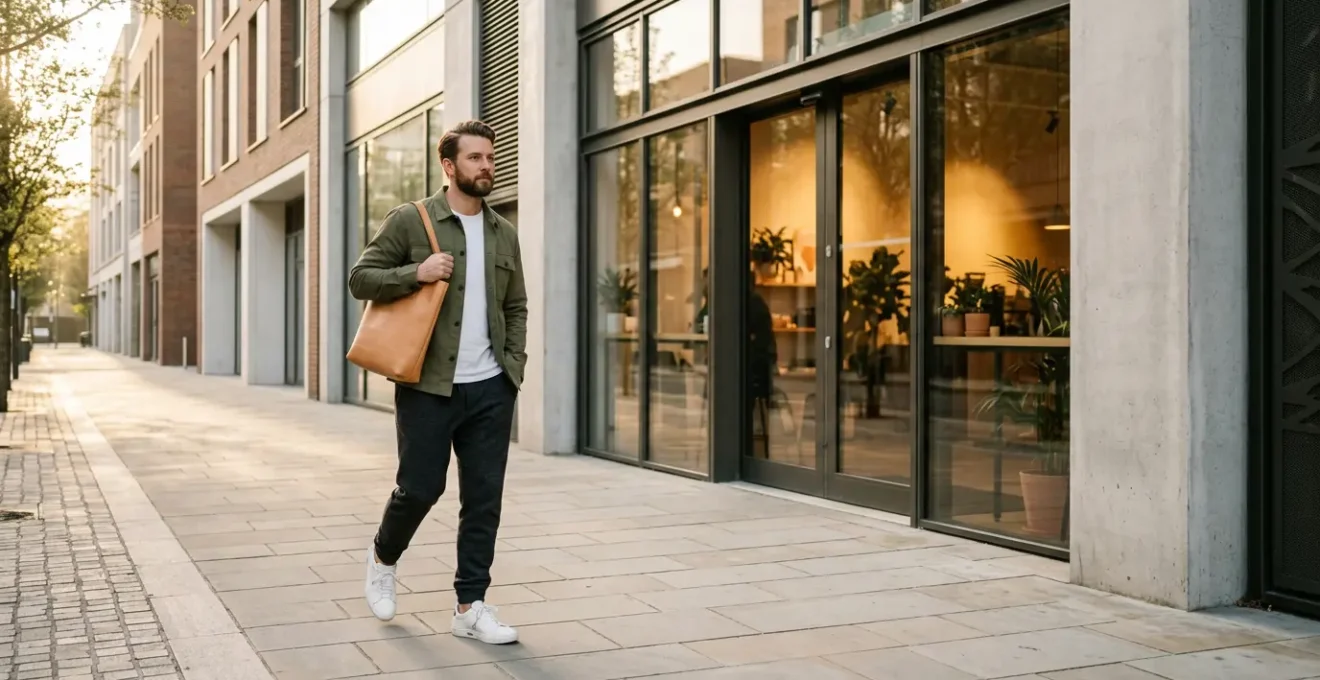
Defaulting to worn-out gym clothes on weekends isn’t a style failure; it’s a system failure.
- The key is building a small, interchangeable « off-duty uniform, » not just buying more clothes.
- Focus on structural integrity in casual pieces (sweatpants, cardigans) and a « 2-sneaker system » to separate gym from life.
Recommendation: Stop thinking about individual outfits and start building a simple system that makes looking good automatic.
The Sunday morning alarm doesn’t go off. You wake up naturally, the promise of a lazy day and a good coffee ahead. You reach for something to wear, and your hand instinctively lands on that pair of worn-in sweatpants and the free t-shirt you got from a 5k race years ago. It’s comfortable, it’s easy, and it requires zero thought. But as you catch your reflection in the coffee shop window, a familiar thought creeps in: « I could do better. » For many men, the weekend wardrobe is an afterthought, a collection of retired gym clothes and faded favorites. The common advice is to simply « buy better clothes, » but this misses the real issue.
The problem isn’t a lack of options; it’s a lack of a system. On a day dedicated to relaxing, the last thing you want is decision fatigue. This is why you default to what’s easiest. The secret to elevating your off-duty style isn’t about a closet full of new, expensive items. It’s about creating a small, curated « off-duty uniform »—a handful of high-quality, interchangeable pieces that look sharp, feel comfortable, and eliminate the guesswork. It’s about understanding the subtle signals your clothes send and making intentional choices that work for you, not against you.
But what does that system look like in practice? It starts with breaking a few common habits and learning to identify the key details that separate « loungewear » from « lazy-wear. » It’s about choosing pieces with structural integrity and understanding how to create a balanced silhouette, even on your most casual days. The goal is to build a foundation that is just as easy as your old gym gear, but infinitely more stylish and versatile.
This guide will walk you through the essential building blocks of that system. We will deconstruct the common weekend style mistakes and provide a clear framework for building an effortless, put-together look. From choosing the right pants and layers to understanding the critical role of your footwear, you’ll learn how to transform your weekend look from an accident to an asset.
Summary: A practical guide to your weekend style system
- Why You Should Never Wear Your Gym Shoes with Jeans?
- How to Style Elevated Sweatpants That Don’t Look Like Pajamas?
- Flannel or Overshirt: Which Is the Best Weekend Layering Piece?
- The ‘Permanent Gym Bro’ Look That Limits Your Social Life
- How to Choose Sneakers That Work for Both Walking and Dining?
- How to Replace Your Blazer with a Heavy Cardigan for Casual Fridays?
- The Sedentary Weekend Effect That Undoes Your Weekday Activity
- How to Wear Streetwear After 35 Without Looking Like a Teenager?
Why You Should Never Wear Your Gym Shoes with Jeans?
The combination of gym shoes and jeans is one of the most common weekend uniforms, yet it almost always falls flat. The reason isn’t just about fashion rules; it’s about a fundamental visual context clash. Your high-performance running shoes are designed with one purpose: athletic activity. Their bulky soles, aggressive shapes, and synthetic mesh materials all scream « I’m about to work out. » Jeans, on the other hand, signal « leisure mode. » When you mix these two powerful signals, you create a confusing and disjointed look. It suggests you’ve either just left the gym or are about to go, even when you’re just meeting friends for brunch.
This clash disrupts your entire silhouette. The clean, classic line of a good pair of jeans is broken by the technical, often jarring design of a modern athletic shoe. The materials also create a textural mismatch; the organic, rugged feel of denim simply doesn’t harmonize with the shiny plastics and engineered mesh of a running shoe. This is more than a style misstep; it’s a missed opportunity to present a cohesive personal image. Interestingly, while the activewear market is booming, there’s a growing awareness of this divide. For instance, research shows that 64% of U.S. millennials bought athletic shoes for non-athletic purposes, highlighting how widespread the habit is, but also why mastering the distinction gives you an immediate style advantage.
The solution isn’t to abandon comfort. It’s to build a « 2-Sneaker System, » which we’ll cover later. By dedicating one pair of shoes for actual exercise and investing in a separate, versatile pair for casual wear, you instantly resolve this context clash. You maintain all the comfort while sending a clear, intentional message: « I’m relaxed, but I’m put-together. »
How to Style Elevated Sweatpants That Don’t Look Like Pajamas?
Sweatpants have shaken off their sloppy reputation, but there’s a vast difference between the pair you sleep in and a pair that’s sharp enough for a Sunday coffee run. The secret lies in one key concept: structural integrity. Elevated sweatpants aren’t just made of a nicer material; they are constructed more like a proper pair of trousers. This means they have a tapered or tailored fit that follows the line of your leg, rather than a baggy, shapeless cut. They are often made from heavyweight loopback cotton or premium blends that hold their shape and drape cleanly.
To style them effectively, think in terms of balance. Since the sweatpants are inherently soft and casual, you need to pair them with more structured pieces on top. This contrast is what creates a polished, intentional outfit. Avoid pairing them with an equally soft, loose t-shirt or hoodie, as this will firmly place you back in « pajama territory. » Instead, opt for a crisp crewneck sweater, a structured overshirt, or even a casual chore coat. These pieces add definition to your shoulders and torso, creating a balanced silhouette that reads as stylish, not sluggish.
Case Study: Brooklyn Cloth’s Redefinition of Streetwear
Brands like Brooklyn Cloth have successfully redefined the sweatpant by focusing on this very principle. Their approach involves using heavyweight fabrics and tailored fits that allow the pants to function as a legitimate piece of streetwear. They demonstrate that when you pair these structured sweatpants with a third piece like an overshirt, the entire outfit is elevated from loungewear to a considered, casual look.
The right footwear is also critical. Ditch the gym shoes and opt for a pair of clean, minimalist leather or suede sneakers. This final touch solidifies the outfit’s intention as a stylish, casual choice, not a lazy one. The goal is to look like you chose to wear sweatpants for their modern, comfortable aesthetic, not because you couldn’t be bothered to put on real pants.
As you can see, the combination of a tapered sweatpant with a structured top layer and clean sneakers creates a look that is both comfortable and undeniably sharp. This is the blueprint for mastering elevated casual style.
Flannel or Overshirt: Which Is the Best Weekend Layering Piece?
When the temperature drops, a simple t-shirt isn’t enough. You need a reliable layering piece that adds warmth, texture, and style. The two dominant contenders for the weekend warrior are the classic flannel shirt and the modern overshirt (or « shacket »). While both are excellent choices, they serve slightly different purposes and project different vibes. Choosing the right one depends on the weather, your desired aesthetic, and how you intend to layer.
The flannel shirt is a timeless piece of Americana. It’s soft, cozy, and brings a touch of nostalgic, rugged charm to an outfit. Typically made from brushed cotton, its primary function is to provide comfortable warmth. It works best as a mid-layer—worn open over a t-shirt on a crisp autumn day, or buttoned up under a heavier jacket when winter truly sets in. Its vibe is inherently relaxed and approachable. In contrast, the overshirt is a more utilitarian and structured piece. Often made from durable materials like cotton twill, canvas, or wool blends, it functions as a true piece of lightweight outerwear. It’s more wind-resistant than a flannel and often features practical details like chest pockets. The overshirt offers incredible versatility, capable of being the final layer on a cool day or fitting under a parka in deep winter.
Ultimately, the choice isn’t about which is « better, » but which is better for the specific situation. The flannel is your go-to for cozy comfort, while the overshirt is your choice for modern utility and structure. For a truly versatile weekend wardrobe, owning one of each is the ideal solution.
To make the decision clearer, this comparative analysis from a recent casual style guide breaks down the key differences:
| Factor | Flannel | Overshirt |
|---|---|---|
| Vibe | Cozy, nostalgic, Americana | Utilitarian, modern, structured |
| Best Weather | Crisp, dry days | Variable conditions, wind-resistant |
| Layering Potential | Mid-layer under jackets | True outerwear over hoodies/flannels |
| Functionality | Warmth and softness | Durability and utility pockets |
| Investment Value | Seasonal piece | Year-round versatility |
The ‘Permanent Gym Bro’ Look That Limits Your Social Life
There’s a look that has become increasingly common in cafes, casual restaurants, and even low-key bars: the « Permanent Gym Bro. » It consists of performance athletic wear—technical shorts or joggers, a moisture-wicking compression shirt, and aggressive training shoes—worn in a purely social, non-athletic context. While comfort is the stated goal, this look sends a powerful and often limiting social signal. It communicates that your identity is one-dimensional, revolving solely around fitness, and that you are « unavailable » for the social context you’re in. It’s the sartorial equivalent of keeping your headphones on in a group conversation.
Wearing gym clothes everywhere suggests you are either in transit to or from a workout, creating a psychological barrier between you and the people around you. It implies a lack of intention and a disregard for the social environment. While you might just be grabbing a coffee, your outfit is broadcasting that your mind is elsewhere—on your next set of reps or your post-workout protein shake. This can inadvertently close doors to spontaneous social interactions, whether it’s a friendly chat with the barista or an unexpected run-in with an acquaintance. It puts you in a personal bubble, signaling that you’re not fully present.
Even fashion’s old guard, once strictly against casual wear, has noted the nuance. The idea isn’t that sweatpants are inherently bad, but that context is everything.
Karl Lagerfeld’s supposed quote, ‘Anyone who wears sweatpants has lost control of their life,’ is increasingly being forgotten. However, the permanent gym look still sends signals of unavailability and one-dimensional identity in social settings.
– Fashion Expert, Asphalt Gold Blog
Breaking free from this look is about embracing versatility. It’s about building that « off-duty uniform » that is just as comfortable as your gym gear but appropriate for a wider range of social situations. By making a small, intentional shift, you open yourself up to the world around you, signaling that you’re present, engaged, and ready for whatever the day might bring.
How to Choose Sneakers That Work for Both Walking and Dining?
The single most impactful upgrade you can make to your weekend style is sorting out your footwear. The key is to stop trying to make one shoe do everything. Your supportive, high-tech running shoes are essential for exercise, but they are the wrong tool for every other job. The solution is the « 2-Sneaker System »: one pair of dedicated athletic shoes for fitness, and one pair of high-quality, versatile sneakers for everything else—from walking the dog to a casual dinner.
But what makes a sneaker « versatile »? The answer lies in its design DNA. A truly versatile sneaker borrows more from a classic dress shoe than it does from a performance running shoe. Look for a clean, minimalist silhouette with a low profile. The upper material is crucial; prioritize premium materials like leather or suede over synthetic mesh. These materials not only look more sophisticated but also age beautifully. Branding should be minimal to non-existent. A loud logo instantly cheapens the look and limits its versatility.
The easiest way to judge a sneaker’s versatility is the « Outsole Test. » Flip it over. A single, solid-color sole (typically white, off-white, or gum) is a hallmark of a versatile shoe. This is often a « cupsole » construction, where the sole is stitched to the upper, creating a clean and durable finish. If the outsole has multiple colors, aggressive treads, or visible air bubbles, it belongs in the gym-only category. This simple test will save you from making a poor investment and ensure the sneakers you buy can be dressed up or down with ease.
Your Action Plan: Implementing the 2-Sneaker System
- Audit Your Current Shoes: Separate your footwear into two piles: pure « Athletic » (for exercise only) and potential « Versatile » (for everything else). Be honest about which is which.
- Identify the Gaps: Do you have a true versatile sneaker? Look for hybrid DNA: leather/suede upper, minimal branding, and a clean, single-color cupsole.
- Apply the Outsole Test: Before buying a new pair, flip them over. A solid-color, relatively flat sole indicates versatility. Multi-colored, aggressive treads mean they’re for walking or running only.
- Define Your Go-To Pair: Select or invest in one high-quality leather or suede hybrid sneaker that will become your default choice for all casual, non-exercise scenarios.
- Maintain the System: Actively reserve your athletic shoes for workouts. Resist the urge to wear them for your coffee run. This discipline is the core of the system.
By implementing this system, you eliminate the daily decision of which shoes to wear. Your choice becomes simple: Am I exercising? Yes? Athletic shoes. No? Versatile sneakers. It’s a foolproof method for looking sharp and appropriate in any casual setting.
How to Replace Your Blazer with a Heavy Cardigan for Casual Fridays?
As workplace dress codes continue to relax, the traditional blazer can sometimes feel too formal, even on a « Casual Friday. » This is where the heavy cardigan emerges as the perfect alternative. It strikes an ideal balance, offering a level of polish and structure that surpasses a simple sweater, without the rigid formality of a tailored jacket. A well-chosen heavy cardigan can project an air of intellectual confidence and approachability, making it a powerful piece in your smart-casual arsenal.
Not all cardigans are created equal, however. To effectively replace a blazer, you need to look for specific characteristics. The key is, once again, structural integrity. Opt for heavy-gauge knits in materials like merino wool, chunky cotton, or a wool-cashmere blend. The fabric should have enough weight to drape cleanly and hold its shape, rather than clinging or sagging. The collar style is also crucial for creating a blazer-like presence. A shawl collar is the best option, as its wide, turned-over design mimics the lapels of a jacket, framing your face and shirt collar beautifully. A high-neck or thick-ribbed collar can also work well.
Trend Analysis: The Rise of the « Swa-zer »
According to Taelor’s Winter 2024 fashion trend analysis, the cardigan’s popularity continues to surge precisely because of this versatility. Style experts note that heavy-gauge knits with significant collars are increasingly taking the place of blazers in both office and off-duty settings. The key to success is the fit: the cardigan should be snug at the shoulders to define your silhouette, providing structure while offering the comfort of knitwear.
Pair it with a crisp button-down shirt or a high-quality polo, along with dark denim or chinos, and you have a sophisticated yet relaxed look. The heavy cardigan acts as a piece of « soft armor, » keeping you warm and making you look put-together without feeling constricted. It’s the modern man’s answer to effortless office style.
The Sedentary Weekend Effect That Undoes Your Weekday Activity
Many of us work hard to stay active during the week, hitting the gym, going for runs, or attending fitness classes. But then the weekend arrives, and a phenomenon known as the « Sedentary Weekend Effect » can take hold. We trade our weekday activity for long hours on the couch, undoing much of our hard work. While the temptation to be completely inactive is strong, the way you dress can have a surprising impact on your motivation. When you stay in your oldest, sloppiest clothes all day, you are psychologically priming yourself for inactivity. Your brain receives the signal: « We’re not going anywhere, we’re not doing anything. »
This is especially concerning when you consider that, for many, activity levels are already low. For example, a 2020 National Health Interview Survey found that only 24.2% of adults meet the recommended guidelines for both aerobic and muscle-strengthening exercise. The weekend, therefore, presents a critical opportunity to move, even in a gentle way—a long walk, a trip to the park, or simply running errands on foot. Making the small effort to get dressed in your « off-duty uniform » can be the catalyst that gets you out the door.
Putting on a clean, sharp outfit, even a casual one, sends a new signal to your brain: « I am ready for the day. » It’s a small act of self-respect that can have a cascade effect on your mood and your actions. This tiny bit of effort can boost your confidence and make you more inclined to be seen, to engage with the world, and to move your body.
Fixing your hair before you head out into the world is an awfully low bar, yet many in the daily coffee shop line can’t seem to rise to the challenge these days. It makes a difference! You’ll feel good. Ready. Confident.
– Dappered Style Guide, Style Scenario: Cool, Casual, Early Morning Coffee Run
This isn’t about looking perfect; it’s about breaking the cycle of weekend inertia. By dressing with intention, you’re not just improving your appearance; you’re setting the stage for a more active, engaged, and ultimately more rewarding weekend.
Key takeaways
- Build a System, Not Just a Wardrobe: The goal is an interchangeable « off-duty uniform » that eliminates decision-making.
- Separate Gym and Leisure: Your most crucial decision is dedicating separate sneakers for fitness and for life to avoid a context clash.
- Invest in Structure and Fit: Elevate casual pieces like sweatpants and cardigans by choosing items with structural integrity and a tailored silhouette.
How to Wear Streetwear After 35 Without Looking Like a Teenager?
Streetwear’s emphasis on comfort and cutting-edge style is appealing at any age, but after 35, the approach needs to evolve. The goal is to incorporate streetwear’s best elements—its functionality, premium fabrics, and modern silhouettes—while avoiding the pitfalls of looking like you’re trying too hard to recapture your youth. The key is to shift your mindset from being a consumer of hype to a curator of quality. Instead of chasing the latest logo-heavy drop, focus on integrating one or two strategic streetwear pieces into an otherwise mature and classic wardrobe.
One of the most important guidelines is the « One Logo Rule. » Limit your entire outfit to a single, prominent logo or graphic element at most. A sophisticated look is about quiet confidence, not being a walking billboard. Secondly, prioritize fit and fabric over everything else. A perfectly fitting, well-made hoodie in a heavyweight material will always look better than a poorly fitting one from a hyped-up brand. Look for streetwear-adjacent luxury brands that offer the silhouettes of streetwear but with elevated materials and a more mature aesthetic.
Case Study: Urban Uniq’s Mature Streetwear Strategy
Brands like Urban Uniq are showcasing how this is done. Their 2024 lookbooks for a more mature demographic emphasize pieces like utility vests instead of graphic hoodies, and well-cut, wide-leg trousers instead of baggy, distressed jeans. The focus is on incorporating streetwear’s functionality and comfort while maintaining a sophisticated silhouette through impeccable fit and premium materials, with branding kept to an absolute minimum.
Finally, master the art of mixing high and low. Pair one standout streetwear piece, like a pair of coveted sneakers or a technical jacket, with timeless, elevated basics like dark-wash denim, a merino wool sweater, or a classic overcoat. This balance is what creates a look that is modern and relevant, yet undeniably adult and self-assured. You’re not wearing a costume; you’re thoughtfully incorporating elements of a contemporary style into your own personal aesthetic.
By building this simple, intentional system, you transform your weekend wardrobe from a source of stress or embarrassment into a tool for confidence. The goal is not to become a fashion expert overnight, but to create an effortless « off-duty uniform » that allows you to feel comfortable, look put-together, and be ready for whatever the weekend holds. Start by auditing your current wardrobe and identifying one or two key pieces you can upgrade to begin building your system today.
Frequently Asked Questions about How to Look Put-Together on a Sunday Morning Coffee Run?
What weight cardigan replaces a blazer effectively?
Look for heavy-gauge knits in wool or chunky cotton with structural integrity – the cardigan should hold its shape when hung.
Which collar styles work best for professional settings?
Shawl collars or high necks provide the most blazer-like presence while maintaining approachability.
How should a blazer-replacement cardigan fit?
It should be snug enough at the shoulders to define your silhouette, not loose or draping like casual knitwear.