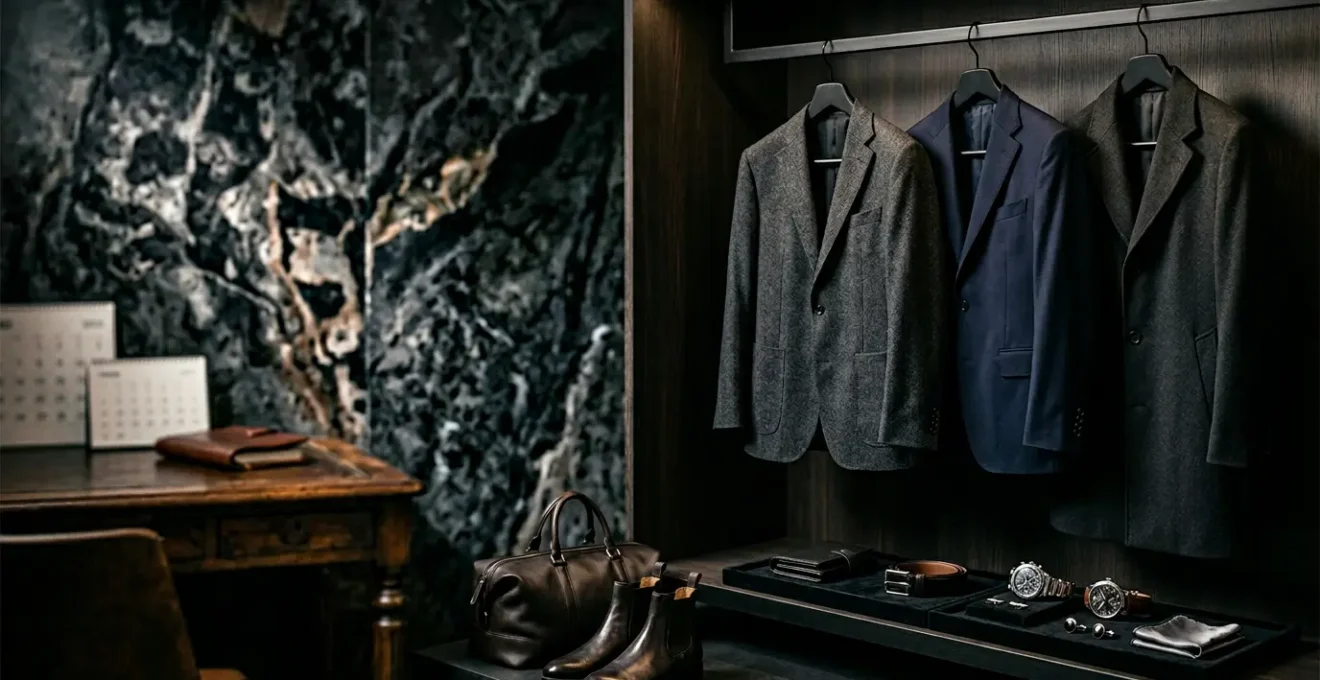
Contrary to popular belief, securing high-demand fashion isn’t about having the fastest fingers on drop day. That’s the game the brands want you to play. The real strategy is to operate outside the hype cycle by mastering the industry’s calendar. It’s about shifting from a reactive consumer to a proactive strategist who leverages pre-orders, understands inventory logic, and makes key purchases months before the general public even knows what it wants.
There’s a familiar, sinking feeling for anyone who loves fashion: the item you’ve been watching, the one that defines the season, is suddenly, irrevocantly sold out. The immediate reaction is to blame bad luck or slow internet. The common advice that follows is always the same: sign up for more newsletters, follow more accounts on social media, and set a dozen alarms for the next drop. You’re told to get faster, to be more vigilant, to compete in a digital footrace against thousands of others for a handful of products.
But what if the entire premise is wrong? What if the key to securing the most coveted pieces isn’t about being quicker on release day, but about being smarter months in advance? The fashion industry, for all its creative chaos, runs on a surprisingly predictable calendar. This calendar, with its pre-season launches, market weeks, and inventory cycles, is a system. And any system can be understood, navigated, and used to your advantage. This isn’t about chasing hype; it’s about anticipating it and acting before it even begins.
This guide moves beyond the generic tips. We’ll deconstruct the industry’s operational clock, transforming you from a frustrated shopper into a calculated insider. We will explore why buying fall collections in July is a power move, how to decipher the signals from the noise in your inbox, and when to strategically wait for a better price. It’s time to stop playing their game and start playing your own.
The following sections break down the essential strategies for mastering fashion’s timeline, from decoding pre-order windows to identifying long-term value. This is your playbook for turning « Sold Out » from a source of frustration into a problem for other people.
Summary: A Strategic Guide to Buying Sold-Out Fashion
- Why Pre-Ordering Fall Clothes in July Saves You Money?
- How to Filter Fashion Newsletters to Find Hidden Gems?
- Who Are the 3 Up-and-Coming Designers to Watch This Year?
- The ‘Hypebeast’ Mistake of Buying Items You Don’t Actually Like
- When Do Major Brands Release Their Online Restocks?
- Why Do Certain Men’s Fashion Trends Return Every 20 Years?
- The Full Price Mistake of Buying New Collections in September
- How to Buy Luxury Watches That Will Hold Their Value?
Why Pre-Ordering Fall Clothes in July Saves You Money?
The idea of buying a wool coat during a heatwave seems counterintuitive, but it’s one of the most powerful moves in strategic shopping. This is the essence of calendar arbitrage: using the fashion industry’s production schedule to your advantage. Brands finalize their fall/winter collections in late spring and need to gauge demand to manage production risk. The pre-order is their primary tool for this.
By offering items for pre-order in June and July, brands incentivize early commitment. This incentive isn’t just about guaranteed availability; it’s often financial. For those who commit early, a 15-30% discount is a typical offering, a reward for helping the brand forecast its sales. You are essentially acting as a micro-investor in a collection, and you get paid for your foresight. This is a stark contrast to the person who waits until September, sees the same coat in a magazine, and pays full price—if they can even find it in stock.
The real advantage is securing the core pieces of your wardrobe—the perfectly cut trousers, a signature piece of outerwear, the boots you’ll wear all season—without competition. While everyone else is distracted by summer sales, you are quietly building your ideal fall wardrobe at a discount. By the time the hype cycle begins in autumn, your work is already done. This isn’t just shopping; it’s a calculated investment in your style and your wallet.
This proactive approach separates the strategic shopper from the reactive consumer, turning the predictable fashion calendar into a source of opportunity rather than anxiety.
How to Filter Fashion Newsletters to Find Hidden Gems?
The standard advice to « sign up for newsletters » is the reason your inbox is a chaotic mess of promotions. The insider’s approach is not to subscribe more, but to filter aggressively. Your goal is to separate the signal from the noise. The signal is exclusive access and curated information; the noise is the mass-market « 20% Off Everything » blast.
The first filter is source. Instead of signing up for every mall brand, focus on tastemaker boutiques and multi-brand retailers known for their curation, like SSENSE, Dover Street Market, or The Webster. As highlighted by top fashion publications, their newsletters are edited by professional buyers whose job is to predict the next big thing. These emails are less about sales and more about editorials, offering early access to emerging designers and exclusive pre-order windows that aren’t advertised to the general public.
The second filter is technical. Create specific rules in your email client to automatically sort incoming messages. By using keywords, you can build a dashboard that surfaces only the most valuable opportunities. This table illustrates which keywords to prioritize in your filters.
This data-driven approach to email organization allows you to find high-value opportunities, like those detailed in this fashion ecommerce marketing analysis.
| Filter Keyword | Typical Benefit | Frequency |
|---|---|---|
| Early Access | 24-48 hour exclusive shopping | Weekly during launches |
| Private Sale | 10-20% additional discount | Monthly |
| Pre-Order | Guaranteed availability | Seasonal |
| Archive | Past season gems at 50-70% off | Quarterly |
This structured system turns your inbox from a source of stress into a strategic intelligence tool. You no longer hunt for information; the most valuable opportunities are delivered and sorted for you automatically.
As visualized here, an organized system allows you to see the patterns. You’ll quickly notice that « Early Access » emails precede major drops, and « Private Sale » invites are a signal that end-of-season markdowns are imminent. You’re not just reading emails; you’re reading the market.
By implementing this two-tiered filtering system, you stop being a passive recipient of marketing and become an active hunter of opportunity, finding the gems that others miss.
Who Are the 3 Up-and-Coming Designers to Watch This Year?
Identifying the « next big thing » before the hype explodes is the ultimate fashion power move. This isn’t about clairvoyance; it’s about knowing where to look for signals. The mainstream fashion press often covers designers only after they’ve already peaked in cultural relevance. The true insider looks at the industry’s institutional pipelines for new talent.
Brands like Telfar and Khaite didn’t just appear out of nowhere. They strategically used models like pre-orders to build a following while managing growth. As the Paris Good Fashion Report notes, this method is key for accessible luxury. In an article titled « The pre-order model: why it’s working, » it highlights how this allows brands to « gauge customer interest and demand without overproducing. » By watching which new brands master this model, you can spot those with a sustainable future.
Instead of asking « who is hot now, » the better question is, « who is being invested in for the future? » The key is to monitor the platforms that nurture and launch new careers. This is less about trend-spotting and more about understanding the ecosystem that creates stars. Following a systematic discovery framework is far more effective than randomly scrolling through social media.
Action Plan: Your Designer Discovery Framework
- Monitor Prize Lists: Annually review the finalist lists for the LVMH Prize and the CFDA/Vogue Fashion Fund. These are the industry’s official endorsements.
- Track Key Retailers: Pay close attention to which new designers are picked up by gatekeeper boutiques like Dover Street Market and H.Lorenzo. Their buy is a major vote of confidence.
- Identify Signature Pieces: Look for emerging designers who create a single, distinctive item—a unique bag, a specific boot silhouette. This is how they build a cult following.
- Follow the Buyers: On Instagram, follow senior fashion buyers and editors from major retailers and magazines, not just influencers. Their personal posts often hint at what they’re seeing in private showrooms.
- Check Trunk Shows: Scrutinize the trunk show schedule on platforms like Moda Operandi. This is where emerging talent gets its first commercial test run.
By following these steps, you’re not just discovering new designers; you’re gaining access to them before their prices and popularity skyrocket, allowing you to invest in a piece of fashion history in the making.
The ‘Hypebeast’ Mistake of Buying Items You Don’t Actually Like
In the world of limited releases, a powerful psychological trap is set: manufactured desire. This is the feeling that you *must* have an item simply because it is scarce, popular, and difficult to obtain. It’s a phenomenon driven by social proof and FOMO (Fear Of Missing Out), where the thrill of the chase and the validation of « copping the drop » overtakes any genuine appreciation for the product itself. This leads to the classic Hypebeast Mistake: a closet full of expensive, « grail » items that you don’t actually like to wear.
The consequences are not just stylistic, but financial. The inefficiency of this impulse-driven behavior is starkly reflected in retail data. Across the industry, fashion return rates are as high as 30-40%, a figure largely driven by bracketing (buying multiple sizes) and post-purchase regret. When you buy for the hype, you’re often just buying a temporary feeling, and that feeling fades quickly once the credit card statement arrives.
The psychology of luxury consumption further explains this behavior. Aspirational triggers are powerful, and for many, spending is driven by optimism about future earnings—a belief that money spent can always be made again. This mindset, while ambitious, creates a vulnerability to impulsive purchases that don’t align with personal style. The antidote is a simple but difficult-to-master question before every high-stakes purchase: « Would I still want this if it wasn’t popular? Would I buy this if it were sitting on a shelf with no one else around? » If the answer is no, you are likely buying the hype, not the item. True style is a reflection of self, not a reflection of what’s trending on a release app.
Building a wardrobe with longevity requires a clear distinction between fleeting trends and personal taste, ensuring every piece you own is a choice, not a reaction.
When Do Major Brands Release Their Online Restocks?
The « Sold Out » sign is not always the end of the story. For many brands, it’s a data collection tool. Understanding when and why restocks happen requires abandoning the idea of random luck and embracing inventory logic. Restocks are rarely random; they are calculated responses to demand, driven by operational schedules and automated systems.
A key concept to grasp is the « Operational Timezone Theory. » Most major fashion brands operate their e-commerce logistics from a central hub, often in Europe (like Italy or France) or the US East Coast (New York). Restocks are typically processed and pushed live during the business hours of that hub’s time zone. This often means restocks for European brands can appear online in the early morning for US-based customers (e.g., 9 AM CET is 3 AM EST). Following a brand’s corporate headquarters location, not just its Instagram account, can provide crucial clues.
Furthermore, modern fashion retail relies on sophisticated automated inventory systems. These platforms don’t wait for a human to notice a demand spike. They are programmed with dynamic rules to trigger replenishment actions automatically within 24-48 hours of an item selling out during a high-profile drop. This is done to prevent « lost sales » and capture every possible transaction. This means the most likely time for a restock is not a week later, but within the 1-2 day window immediately following the initial sell-out. The key is to be vigilant during this short, automated response period, as this is when small batches of inventory, often from canceled orders or warehouse transfers, are made available.
By understanding these logistical patterns, you can predict restock windows with greater accuracy, turning the frantic chase into a patient, strategic wait.
Why Do Certain Men’s Fashion Trends Return Every 20 Years?
The cyclical nature of fashion, particularly the oft-cited « 20-Year Rule, » is not a coincidence but a predictable pattern driven by generational psychology and cultural nostalgia. The return of Y2K aesthetics in the 2020s, like the revival of 70s styles in the 1990s, follows a clear and understandable rhythm. It’s a process of rediscovery and reinterpretation.
At its core, the 20-year cycle is fueled by a new generation of designers and consumers coming of age. This new generation, now in their 20s and 30s, looks back at the styles that were popular during their childhood and adolescence. These are the aesthetics they were surrounded by but were too young to participate in as adults. There’s a built-in nostalgia for the era, but also a critical distance that allows for reinterpretation rather than simple replication.
This dynamic is perfectly captured by a core insight from fashion industry analysis. As a leading report on the subject notes:
Each generation rediscovers and reinterprets the styles of their parents’ youth as a way of connecting with and simultaneously rebelling against that history.
– Fashion Cycle Analysis, Business of Fashion Industry Report
This « connect and rebel » dynamic is crucial. A young designer today might take the low-rise jeans or baggy silhouettes of the early 2000s (their « parents’ youth ») and update them with modern fabrics, proportions, and cultural references. They are connecting to the history and iconography of that time while simultaneously making it their own—rebelling against the original context to create something new. This cycle ensures that fashion is in a constant dialogue with its own past, guaranteeing that what seems dated today is simply gestating for its revival tomorrow.
Understanding this pattern allows a strategic shopper to not only anticipate what’s next but also to invest in timeless pieces that will inevitably come back into vogue.
The Full Price Mistake of Buying New Collections in September
September is the month of fashion optimism. Magazines are thick with editorials, new collections fill the racks, and the temptation to buy into the new season at its peak is immense. However, from a strategic perspective, paying full price in September is often a significant mistake. The fashion retail model is built on a predictable cadence of markdowns, and patience is a highly rewarded virtue.
The industry is under constant pressure from overproduction. Even the most popular items are often produced in quantities that exceed initial demand, leading to an inevitable progression of discounts as the season wears on. Waiting just a few weeks can yield substantial savings. The key is to have a clear wish list and the discipline to wait for the first markdown, which often occurs just before the mid-season point in late October.
A « Fashion Patience Index » can help visualize the trade-off between immediacy and value. By tracking the probability of discounts over the season, a clear pattern emerges, showing how quickly the odds shift in the consumer’s favor.
| Time Period | Discount Probability | Typical Savings |
|---|---|---|
| September Launch | 0% | Full Price |
| Late October | 20% | 10-15% off |
| Black Friday | 40% | 25-30% off |
| Post-Christmas | 70%+ | 40-60% off |
This timeline demonstrates that the risk of an item selling out must be weighed against the high probability of a future discount. For truly unique, limited-production items from emerging designers, buying at launch may be necessary. But for core collection pieces from established brands, waiting is almost always the financially superior strategy. The fear of missing out is a powerful marketing tool, but the data shows that those who can withstand it are the ones who ultimately win.
By understanding this index, you can make an informed decision on whether to buy now or to wait for a more opportune moment, maximizing the value of your wardrobe budget.
Key Takeaways
- Practice Calendar Arbitrage: The most strategic purchases are made out of season. Buy fall collections during summer pre-orders to secure discounts and guarantee availability before the hype begins.
- Filter Signal from Noise: Don’t just subscribe to newsletters; create a filtered system. Focus on tastemaker boutiques and use keywords like « Early Access » and « Private Sale » to find exclusive opportunities.
- Distinguish Hype from Value: Before any high-demand purchase, ask if you’d still want the item if it weren’t popular. This separates genuine personal style from the trap of manufactured desire.
How to Buy Luxury Watches That Will Hold Their Value?
Investing in a luxury watch is about more than telling time; it’s about acquiring an asset that can, with careful selection, maintain or even increase in value. Unlike most fashion items, certain timepieces have a proven track record of value preservation. However, this is not a universal rule. The market is flooded with watches that depreciate the moment they leave the store. The key is to buy with the mindset of a collector, focusing on the specific attributes that the secondary market values most.
The beauty and craftsmanship of a luxury watch are only part of the equation. As this image suggests, the intricate details—the finishing on the case, the patina on the dial, the precision of the movement—are what create lasting desirability. But beyond aesthetics, a strict set of criteria determines a watch’s investment potential. These include brand heritage (Rolex, Patek Philippe, Audemars Piguet being the blue chips), model rarity, and, most importantly, condition and completeness.
To navigate this complex market and make a sound purchase, it’s essential to follow a rigorous verification process. A detailed report from industry experts at Bain & Company on the luxury market underscores that authenticity and provenance are paramount. The following checklist outlines the non-negotiable points to verify before purchasing a pre-owned luxury watch to ensure it’s a sound investment.
- Box and Papers: Verify the presence of the original box, warranty card, manuals, and receipts. A « full set » can add 15-25% to a watch’s value.
- Case Condition: Look for an « unpolished » case. Polishing can remove the sharp, original lines of the case and decrease collector value.
- Service History: Request documentation of any movement servicing, preferably from authorized dealers, to ensure the watch’s mechanical integrity.
- Bracelet Completeness: Count the bracelet links against the original factory specification. Missing links are expensive to replace.
- Dial Rarity: Research the specific dial configuration. Small variations (a « -Tiffany & Co.- » stamp, a « tropical » patina) can dramatically increase value.
- Target Neo-Vintage: Focus on pieces from the 1990s and early 2000s. These offer a sweet spot of modern reliability and growing vintage appeal.
By treating the purchase as an acquisition of a tangible asset and performing due diligence, you can enjoy the horological artistry of a fine watch while making a sound financial decision.