The way we define masculinity through style is broken; true modern style isn’t about projecting power but expressing an authentic internal identity.
- Vulnerability, expressed through softer fabrics and relaxed fits, has become a new form of strength and confidence.
- Authentic style comes from an « inside-out » approach, where personal values—not external trends—dictate your wardrobe.
Recommendation: Stop trying to fit into a pre-defined style archetype and start a process of ‘sartorial self-authorship’ to build a wardrobe that is an honest reflection of who you are.
The modern man stands at a crossroads, bombarded by conflicting messages about what his style should signify. On one hand, the lingering specter of the « alpha male » pushes a narrative of power suits, rigid postures, and dressing for dominance. On the other, fleeting social media trends dictate an endless cycle of consumption, urging conformity to the latest aesthetic. This leaves many feeling like they are wearing a costume, performing a version of masculinity rather than genuinely expressing it. The pressure to choose between being a « suit guy » or a « streetwear guy » creates a false dichotomy that ignores the nuanced reality of a man’s identity.
Most advice falls into predictable traps: checklists of « essential » items that create uniformity, or encouragement to copy the style of a celebrity icon. But these external solutions rarely lead to internal satisfaction. The discomfort many men feel when dressing is a sign of a fundamental misalignment between their inner world and their outward appearance. This is the core problem: we’ve been taught to see style as a way to project an image for others, rather than as a language to communicate who we are to ourselves.
But what if the true path to a powerful personal style isn’t about adopting an external framework, but about developing your own? This article proposes a different approach: sartorial self-authorship. It’s the idea that your wardrobe can become a vocabulary to express your values, your intellect, and even your vulnerabilities. Instead of asking « What should I wear to look powerful? », we will ask, « What can I wear to feel authentic? ». We will explore how to deconstruct outdated rules, find mentors who reflect your values, and build a style that is a true extension of your character, not a shield against the world.
This guide will deconstruct the old rules and provide a new framework for building a personal style rooted in authenticity. We’ll examine the role of vulnerability, the art of wearing formalwear without feeling like an imposter, and how to cultivate an aesthetic that is both intellectual and intentional.
Summary: How to Author Your Own Masculinity Through Style
- Why Is Vulnerability Becoming a Key Element of Modern Masculine Style?
- How to Wear a Suit When You Don’t Feel Like a ‘Suit Guy’?
- Steve McQueen or James Dean: Which Icon Represents Your Archetype?
- The ‘Alpha Male’ Posturing That Makes You Look Insecure
- How to Find a Style Mentor Who Aligns With Your Values?
- Why Do You Feel Uncomfortable When You Dress for Others?
- Why Admitting Fear Makes You a Stronger Leader?
- How to Dress Like an ‘Intellectual Creative’ Without Looking Sloppy?
Why Is Vulnerability Becoming a Key Element of Modern Masculine Style?
For decades, masculine style was synonymous with armor. Stiff fabrics, padded shoulders, and restrictive tailoring were designed to project an image of impenetrable strength. Today, a quiet revolution is underway. Vulnerability in style is no longer seen as weakness, but as a form of quiet confidence. It’s the courage to be approachable, human, and authentic. This shift is about trading the rigid shield of « power dressing » for the connective potential of a more open aesthetic. It’s about signaling that your strength doesn’t rely on intimidation.
This trend is not just philosophical; it’s reflected in tangible market shifts. A WGSN analysis noted a 33% increase in searches for ‘men’s basket bags’ and a rise in softer accessories, indicating a move away from purely utilitarian or aggressive aesthetics. Men are embracing fabrics like cashmere, soft cotton, and merino wool that invite connection rather than create distance. This stylistic choice communicates a sense of self-assurance that doesn’t need to be broadcasted through sharp lines and rigid forms. It’s a masculinity that is comfortable in its own skin.
Embracing this style doesn’t mean sacrificing masculinity; it means redefining it. Here are practical ways to incorporate this ethos:
- Start with texture: Choose soft, touchable fabrics like cashmere or merino wool to signal approachability.
- Practice ‘Sprezzatura’: Master the art of confident imperfection by leaving a collar slightly unbuttoned or a tie loosely knotted.
- Incorporate personal history: Wear a vintage or inherited piece, like a grandfather’s watch, that tells a personal story.
- Embrace color gradually: Begin with muted earth tones and pastels to express emotion and nuance beyond the standard corporate palette.
- Layer with intention: Use unstructured cardigans and knit blazers instead of rigid suit jackets for a softer, more modern silhouette.
Ultimately, this stylistic vulnerability is a display of inner strength. It’s a declaration that your identity is solid enough that you don’t need sartorial armor to protect it. It is the first step towards true sartorial self-authorship, where your clothes reflect your inner state, not a prescribed role.
How to Wear a Suit When You Don’t Feel Like a ‘Suit Guy’?
The traditional suit can feel like a costume for many men—a symbol of a corporate world they don’t belong to or a rigid formality that stifles their personality. The term « suit guy » often evokes an image of conformity and conservatism, which can be alienating. However, abandoning tailoring altogether is not the only option. The solution lies in deconstruction: breaking the suit down into its components and reinterpreting it to align with your own identity. It’s about making the suit serve you, not the other way around.
The key is to move away from the traditional, rigid silhouette and embrace a deconstructed approach. This involves softer shoulders, lighter fabrics, and a willingness to mix tailored pieces with more casual elements. A soft-shouldered blazer in a jersey or linen blend, for example, offers the structure of a suit jacket but with the comfort and ease of a cardigan. It’s a piece that can be paired with quality denim or chinos, instantly bridging the gap between formal and casual.
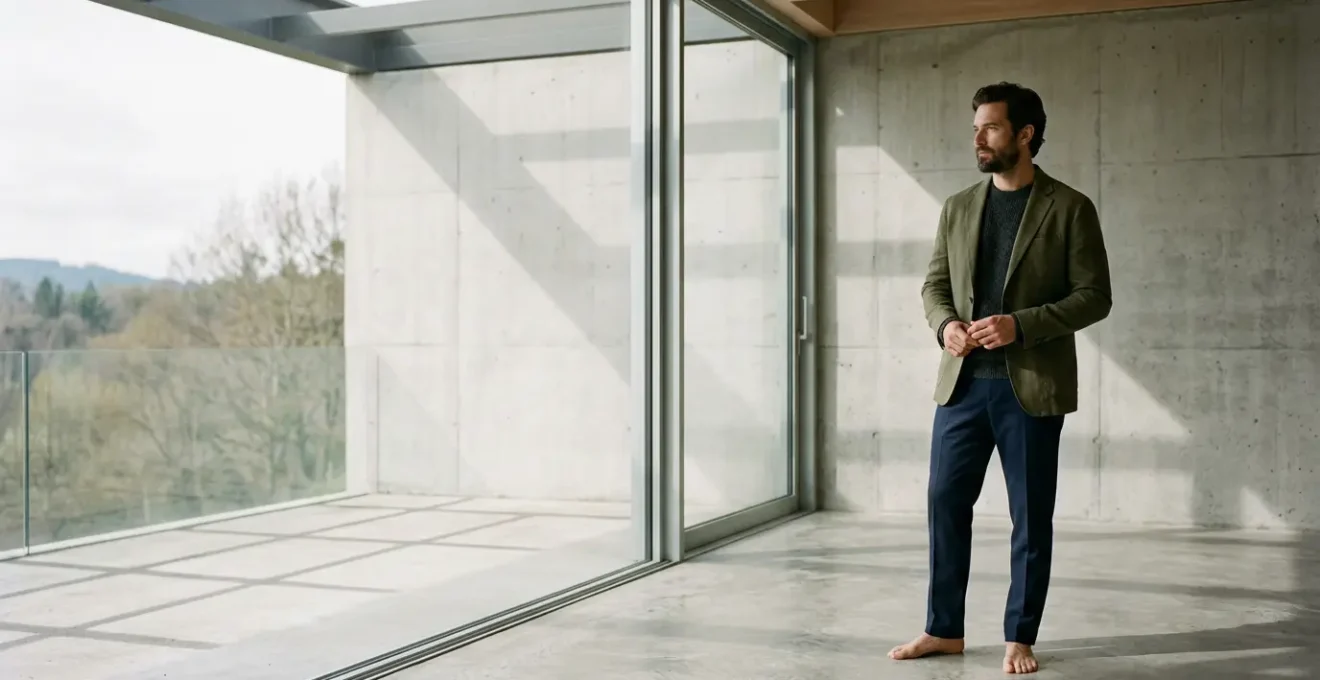
As the image above illustrates, this approach is about creating a dialogue between different elements of a wardrobe. The man pictured isn’t a « suit guy » in the traditional sense; he is a man who uses a piece of tailoring—the blazer—as part of a broader personal narrative that also includes casual, comfortable items. The focus is on the interplay of textures and the overall feeling of relaxed confidence. This intentional mixing is a core tenet of modern style, proving that sophistication doesn’t require rigidity.
This table breaks down the fundamental differences between the old and new ways of thinking about tailoring, providing a clear path for anyone looking to incorporate a suit on their own terms.
| Aspect | Traditional Suit | Deconstructed Approach |
|---|---|---|
| Structure | Fully canvassed, padded shoulders | Soft shoulders, minimal padding |
| Materials | Wool worsted, rigid fabrics | Jersey, linen, cotton blends |
| Styling | Complete matching set | Mix with denim, chinos, knitwear |
| Accessories | Silk tie, dress shirt | Knit tie, band collar, subtle jewelry |
| Comfort Level | Formal, restrictive | Relaxed, movement-friendly |
Steve McQueen or James Dean: Which Icon Represents Your Archetype?
For generations, men have looked to style icons like Steve McQueen, the « King of Cool, » or James Dean, the brooding rebel, as archetypes to emulate. These figures provided clear, albeit binary, templates for masculine expression: the rugged, competent adventurer versus the sensitive, misunderstood outsider. While useful as starting points, relying solely on these historical archetypes in the 21st century is like trying to navigate a modern city with a medieval map. Masculinity has evolved, and so have the ways we can express it through style.
The modern approach to finding your archetype is less about copying a single icon and more about creating a unique synthesis. The goal is not to become a carbon copy of someone else, but to identify the values and traits in others that resonate with your own identity and weave them into a personal narrative.
Case Study: Modern Style Archetypes Beyond Classic Hollywood
The fashion industry has witnessed a significant shift from binary masculine archetypes to more fluid, hybrid identities. Contemporary figures exemplify this evolution. Donald Glover, for instance, masterfully blends intellectual sophistication with playful, creative expression, creating a « Creative Scholar » archetype. Riz Ahmed, on the other hand, often represents the « Sharp Intellectual, » with a style that is precise, thoughtful, and modern. This evolution reflects how contemporary masculinity embraces multiple facets, allowing men to create personalized style narratives that combine elements from a wide range of influences rather than conforming to a single, rigid stereotype.
This movement toward personal synthesis is at the heart of sartorial self-authorship. It’s about seeing style icons not as blueprints to be copied, but as sources of inspiration for your own creation. This philosophy was perfectly articulated by a legendary figure who understood the power of self-definition. As actor and director Orson Welles once stated:
Fashion is knowing who you are, what you want to say, and not giving a damn.
– Orson Welles, Male Fashion and Masculinity, Lutopia Magazine
This sentiment liberates you from the need to fit into a pre-existing box. Your archetype isn’t McQueen or Dean; it’s you, curated and composed from the elements that you choose to represent your unique story.
The ‘Alpha Male’ Posturing That Makes You Look Insecure
The « alpha male » style trope—loud logos, ostentatious watches, and « power » clothing designed to create artificial bulk—is a relic of an outdated model of masculinity. It is built on the flawed premise that dominance must be visually performed. In the modern context, however, this kind of sartorial posturing often has the opposite effect. Instead of projecting confidence, it signals a deep-seated insecurity, a need for external validation through brands and aggressive silhouettes. It is a style that shouts, whereas true confidence whispers.
Quiet confidence, by contrast, is demonstrated through subtlety, quality, and fit. It prioritizes luxurious fabrics that feel good against the skin over flashy logos that scream for attention. It favors a perfect fit that complements one’s natural physique over oversized garments intended to intimidate. This approach is not about hiding; it’s about being so self-assured that you no longer need your clothes to announce your presence. This shift in mindset is supported by data on workplace attitudes; a 2024 study found that 92% of U.S. Millennial men perform better at work when they feel comfortable in their clothes, rather than when forced into a formal, performative uniform.
Distinguishing between insecure posturing and quiet confidence is key to developing an authentic personal style. The difference often lies in the intention behind a choice.
- Fabrics over Logos: Quiet confidence is found in the quality of a cashmere sweater, not the size of the logo embroidered on it.
- Fit over Bulk: It’s expressed through a jacket that fits perfectly across the shoulders, not one with excessive padding designed to create a false sense of size.
- Timelessness over Trends: It’s an investment in a well-made leather jacket that will last a decade, rather than chasing a fleeting, attention-grabbing statement piece.
- ‘Sprezzatura’ over Perfection: It embraces the art of looking effortlessly put-together, a stark contrast to the rigid, try-hard appearance of someone overly styled.
Ultimately, « alpha » posturing is a performance for an external audience. Quiet confidence is a state of being, reflected in choices made for oneself. It is the physical manifestation of knowing you have nothing to prove.
How to Find a Style Mentor Who Aligns With Your Values?
The search for style guidance often leads to a simple, yet flawed, strategy: find one person you admire and copy their look. This approach, however, turns you into a replica rather than an original. A more sophisticated and effective method is to move beyond the idea of a single mentor and instead curate a « board of directors » for your style. This involves identifying several individuals, real or fictional, who each embody a specific value or aesthetic that resonates with you. You are not copying them; you are learning from them.
One person on your board might represent your professional aspirations—perhaps a minimalist architect whose style is clean, functional, and precise. Another could represent your creative side—a musician whose weekend attire is relaxed, textured, and expressive. A third might embody your love for the outdoors—a craftsman whose clothing is durable, practical, and timeless. By drawing inspiration from multiple sources, you avoid direct imitation and instead create a unique synthesis that is entirely your own. This method is a practical application of sartorial self-authorship.
This concept allows for a much more nuanced and personal approach to building a wardrobe, as it’s rooted in a deep understanding of one’s own multifaceted identity.
The Virtual Style Board of Directors Approach
Style consultant Tanner Guzy champions a methodology that involves creating a « Virtual Style Board of Directors. » Instead of following one guru, clients are encouraged to curate 3-5 figures who each represent a different facet of their desired identity. For example, one of his clients seeking to project more gravitas combined elements from different mentors: the professional seriousness of a minimalist architect for work, the creative freedom of a vintage musician for weekends, and the rugged authenticity of a traditional craftsman for personal projects. This strategic approach prevents direct imitation and fosters a unique, personal synthesis of influences, ensuring the final style is authentic to the individual.
Your board of directors doesn’t have to be famous. It can include a colleague whose professionalism you admire, a character from a film whose ethos you connect with, or even a historical figure. The key is to look for the underlying principles of their style—the ‘why’ behind what they wear—not just the specific items. This turns mentorship from a process of imitation into an exercise in curation and self-expression.
Why Do You Feel Uncomfortable When You Dress for Others?
That familiar feeling of discomfort—the slight awkwardness of wearing an outfit that feels more like a costume than a second skin—is a critical piece of data. It’s a signal that there is a disconnect between your internal self and your external presentation. This feeling, often dismissed as shyness or a lack of confidence, is actually a sign of compromised aesthetic integrity. You feel uncomfortable because you are dressing to meet an external expectation, whether it’s a corporate dress code, a social trend, or a partner’s preference, at the expense of your own authentic expression.
Research confirms this connection between clothing and self-perception. A 2024 study on U.S. adults found a direct correlation between clothing style confidence and self-enhancement values, demonstrating that when our clothes align with our internal values, our confidence grows. When they don’t, we feel a sense of dissonance. This discomfort is often rooted in deep-seated anxieties about how men’s fashion choices are judged.
Fashionable, image-conscious or simply ‘dressy’ men often arouse anxieties in gendered as well as sexual terms, being perceived not only as potentially gay or sexually ambiguous but as somehow not fitting in.
– Tim Edwards, Cultures of Masculinity
To overcome this, you must reverse the process. Instead of dressing from the outside-in (letting external expectations dictate your choices), you must learn to dress from the inside-out. This begins with identifying your core personal values—like creativity, integrity, adventure, or comfort—and using them as the foundation for your wardrobe. The following audit provides a concrete method for putting this philosophy into practice.
Your Action Plan: The Inside-Out Wardrobe Audit
- List Core Values: Identify 3-5 core personal values that define you (e.g., creativity, integrity, adventure, comfort).
- Connect to Textures: Identify fabrics and textures that evoke these feelings (e.g., soft knits for comfort, rugged leather for adventure).
- Choose Resonant Colors: Select colors that align with your emotional state and personality, not just what’s dictated by trend reports.
- Build from Your Foundation: Create outfit foundations from these core pieces before even considering external expectations or dress codes.
- Practice Identity Maintenance: Wear at least one « authentically you » item, even in formal settings, to maintain a connection to your core identity.
Why Admitting Fear Makes You a Stronger Leader?
The traditional model of leadership was built on a foundation of stoicism and infallibility. Leaders, particularly men, were expected to be unshakeable pillars of strength, never admitting fear, doubt, or uncertainty. Their style reflected this: the « power suit » was a form of armor, creating distance and reinforcing hierarchy. However, the modern workplace values collaboration, empathy, and authenticity over authoritarianism. In this new paradigm, the leader who admits vulnerability isn’t seen as weak, but as human, relatable, and trustworthy.
This shift has a direct corollary in leadership style. The approachable leader trades the intimidating power suit for a more relaxed and open aesthetic. This isn’t about being sloppy; it’s a calculated choice to use clothing to break down barriers and foster connection. A study on workplace attire found that 81% of workers globally perform better when dressed comfortably, and 76% report that it improves their connections with colleagues. An approachable style—like a soft-shouldered blazer instead of a rigid one—is a non-verbal cue that says, « I am accessible, and my authority doesn’t depend on intimidating you. »
This evolution from performative power to authentic leadership is visible even at the highest levels of fashion, signaling a broad cultural shift.
Case Study: Evolution from Power Dressing to Approachable Leadership Style
The transition from rigid power suits to a more approachable leadership aesthetic was perfectly captured in Dior Men’s Winter 2024-2025 collection. Creative director Kim Jones replaced traditional, heavily-structured suits with soft-shouldered blazers paired with refined knitwear. This deliberate choice demonstrated how modern leaders can express strength through accessibility and humanity rather than hierarchical distance. The collection mirrored broader workplace trends, where collaborative leadership styles demand clothing that signals openness and encourages teamwork, proving that true power lies in connection, not intimidation.
By choosing an aesthetic that is more open and less rigid, a leader communicates that they are confident enough to not need armor. It shows they lead through influence and respect, not fear. Admitting fear, and dressing in a way that reflects this humanity, doesn’t undermine authority; it modernizes it and, in doing so, makes it far more powerful.
Key Takeaways
- True style is an act of ‘sartorial self-authorship,’ not conformity to external trends or archetypes.
- Vulnerability in style—through soft textures and relaxed fits—is a modern sign of confidence, not weakness.
- The most authentic wardrobe is built from the ‘inside-out,’ starting with personal values rather than outside expectations.
How to Dress Like an ‘Intellectual Creative’ Without Looking Sloppy?
The « intellectual creative » archetype—the writer, architect, or artist—often walks a fine line between looking thoughtfully nonchalant and simply looking sloppy. The aesthetic aims for an air of ‘sprezzatura’, or studied carelessness, but can easily devolve into wrinkled shirts and ill-fitting basics. The key to mastering this look is intention. Every choice, from fabric to fit, must be deliberate, even if the final result appears effortless. It is the difference between a random assortment of clothes and a carefully curated personal uniform.
Many creatives adopt a simplified wardrobe to minimize decision fatigue. As one analysis noted, this is a strategic choice to preserve mental energy. The purpose of a uniform is to simplify, not to signal apathy.
Many creatives adopt a uniform to reduce cognitive load for trivial decisions, saving mental energy for their work.
– Fashion Industry Analysis, State of Fashion 2024 Report
This uniform, however, must be built on a foundation of quality and fit. The sloppy version of this archetype relies on cheap, disposable basics. The intentional version invests in high-quality, durable materials like Japanese selvedge denim, Harris Tweed, or Ventile cotton. These are fabrics with character and history, chosen for their longevity and the way they wear over time. The fit is relaxed but not baggy, creating a silhouette that is comfortable yet considered. The difference between the two is subtle but profound.
The following table clarifies the distinction between a lazy execution and an intentional one, offering a guide to cultivating this specific aesthetic with precision.
| Element | Sloppy Execution | Intentional Execution |
|---|---|---|
| Layering | Random pieces thrown together | Calculated high-low mix (tailored trousers + perfect tee) |
| Fabrics | Basic cotton, polyester blends | Japanese selvedge, Harris Tweed, Ventile cotton |
| Fit | Oversized everywhere | Relaxed but structured, deliberate proportions |
| Accessories | None or mismatched | Vintage watch, quality leather goods, minimal jewelry |
| Personal Uniform | Same unwashed items | Rotating quality basics in consistent color palette |
Dressing like an intellectual creative is not about neglecting your appearance; it’s about curating it so thoughtfully that it no longer requires daily effort. It is the ultimate expression of using style as a tool that serves your life and work, rather than being a distraction from it.
Frequently Asked Questions on How to Author Your Own Masculinity Through Style
How do I identify my style archetype without copying celebrities?
Start by listing your core values and lifestyle needs, then observe which clothing makes you feel most authentic. Your archetype emerges from the intersection of your personality, profession, and personal history.
Can I blend multiple style archetypes?
Absolutely. Modern masculinity encourages synthesis. You might be ‘Rugged Professional’ during the week and ‘Creative Minimalist’ on weekends. The key is intentional blending, not random mixing.
What if my style archetype conflicts with my workplace dress code?
Find subtle ways to express your identity within constraints: unique textures, personal accessories, or distinctive grooming choices that comply with codes while maintaining individuality.