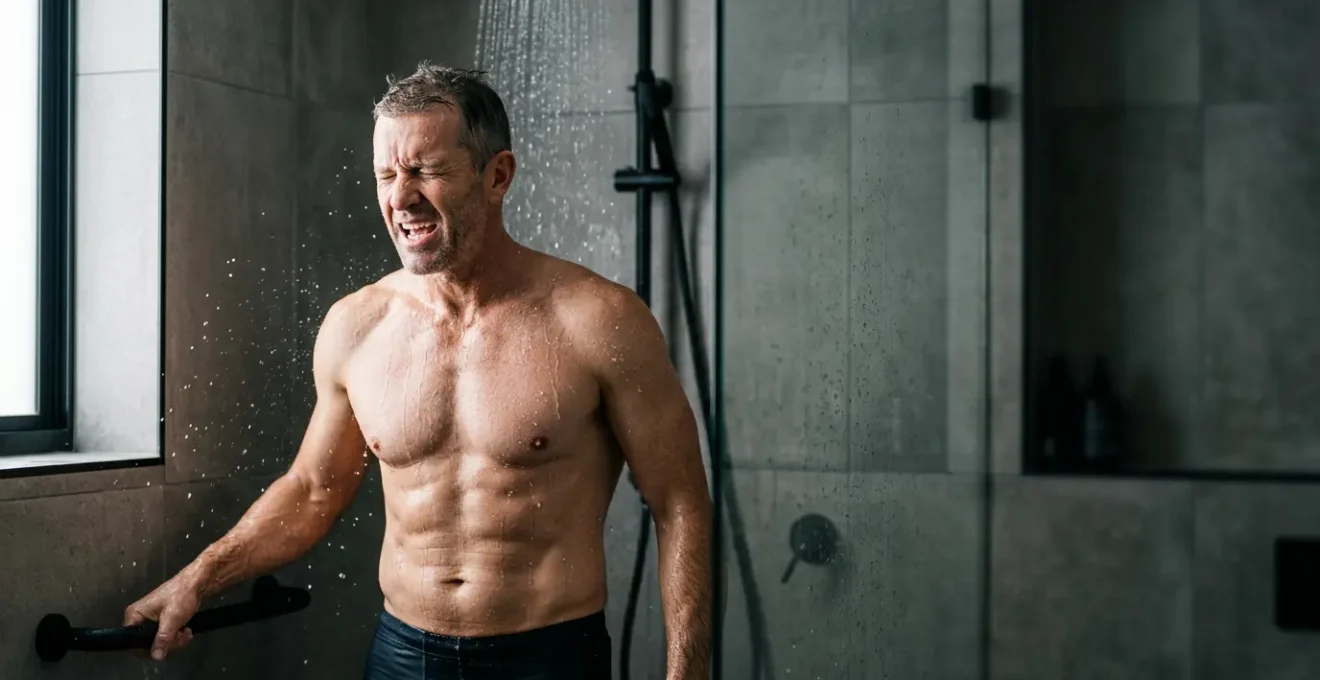
The effectiveness of thermal therapy lies not in endurance, but in precision. It’s a tool for nervous system regulation and metabolic signaling, not a test of willpower.
- Mastering the « dose-response » relationship—the precise interplay of temperature, duration, and timing—is what separates random discomfort from targeted physiological adaptation.
- Cold exposure is a potent signal to activate brown adipose tissue (BAT) and trigger powerful neurotransmitter releases, but heat and contrast protocols are equally critical for recovery and detoxification.
Recommendation: Begin by mastering one protocol, such as a timed morning cold shower or a post-workout sauna, and track your body’s response before layering additional stressors.
The initial shock of cold water is a primal signal, a jolt to the system that screams for retreat. Mainstream advice often stops here, championing the act as a blunt instrument for building « mental toughness » or vaguely « boosting metabolism. » This is a disservice to the sophisticated biological mechanisms at play. The health enthusiast or biohacker is not interested in platitudes; they demand protocols, data, and repeatable results. The conversation must evolve beyond simply enduring the cold.
This is not a guide about gritting your teeth. This is a manual for wielding temperature as a precise instrument. The true power of thermal therapy—whether through icy plunges, blistering saunas, or contrast cycling—is in its capacity to apply a controlled, or hormetic, stress. This is a deliberate stressor that, when applied with the correct dose and frequency, forces the body to adapt, becoming stronger, more efficient, and more resilient. The question is not *if* you should use thermal therapy, but *how* you should program it to achieve specific, targeted outcomes.
We will dissect the science behind these protocols. We will move from the cellular activation of brown fat to the systemic regulation of your nervous system. You will learn to differentiate between a sauna and a steam room for detoxification, master the optimal hot-cold ratios for muscle recovery, and understand the critical safety parameters that most beginners ignore. This is about turning a random act of discomfort into a disciplined practice of self-optimization.
This guide provides the framework for that discipline. The following sections offer a deep dive into the specific protocols and scientific principles that govern effective thermal therapy, allowing you to build a personalized and powerful routine.
Summary: Harnessing Cold Exposure: A Protocol-Driven Guide to Metabolic and Mental Resilience
- Brown Fat Activation: How Cold Water Actually Burns Calories?
- Sauna vs. Steam Room: Which Is Better for Detox and Circulation?
- Hot-Cold-Hot: What Is the Optimal Ratio for Muscle Recovery?
- The Safety Error That Makes Cold Plunges Dangerous for Beginners
- Morning or Night: When Is the Best Time for Cold Therapy?
- Why Do Muscles Take 48 Hours Longer to Repair After Age 40?
- Sympathetic vs. Parasympathetic: How to Switch Your Nervous System Mode?
- How to Turn Your Bedroom into a Recovery Chamber for Better Sleep?
Brown Fat Activation: How Cold Water Actually Burns Calories?
The notion that a cold shower can « melt away » fat is a gross oversimplification. The real mechanism is far more sophisticated and centers on the activation of a specific type of tissue: Brown Adipose Tissue (BAT), or brown fat. Unlike white fat which stores energy, BAT is metabolically active and packed with mitochondria. Its primary function is thermogenesis—burning calories to generate heat.
When your body is exposed to cold, it sends a powerful signal to activate this BAT. These specialized fat cells begin to burn fatty acids and glucose to produce heat and maintain your core body temperature. This is not a magic bullet for weight loss. A meta-analysis suggests that sustained exposure to mild cold (around 16-19°C) might increase daily energy expenditure, but this was under extended lab conditions. The caloric burn from a brief, 2-5 minute cold shower is modest. The real benefit is not the immediate calories burned, but the long-term metabolic signaling. Regularly activating your BAT is like training a muscle; it improves your body’s overall metabolic flexibility and efficiency.
The goal is not to « burn » a meal with a shower. The goal is to send a consistent, hormetic signal to your body to up-regulate its thermogenic machinery. Research on practitioners like Wim Hof has shown significant increases in BAT in response to consistent cold exposure protocols. Think of cold exposure less as a workout and more as a programming instruction for your metabolism, teaching it to be more resilient and efficient in generating its own heat.
Sauna vs. Steam Room: Which Is Better for Detox and Circulation?
While cold is a tool for activation and stress, heat is a tool for relaxation and release. Both saunas and steam rooms induce sweating, which aids circulation and can help eliminate toxins. However, their mechanisms and effectiveness differ significantly, especially concerning detoxification. The primary difference lies in the type of heat and the humidity level.
The dry, intense heat of a traditional or infrared sauna penetrates deeper and promotes a more profuse sweat. This is particularly relevant for detoxification. For instance, the BUS study, which investigated chemical residues in participants, found that for many toxins, sweating can be a more effective elimination pathway than urine. A key finding was that 80% of participants showed detectable cadmium in sweat, demonstrating its role as a route of excretion for heavy metals. Infrared saunas are often considered superior in this regard because their heat penetrates tissues more deeply, potentially mobilizing more toxins.
A steam room, with its 100% humidity, is excellent for respiratory health. The moist air can soothe mucous membranes and help clear congestion. However, the lower temperature and high humidity mean the sweat produced is often less profuse and contains less mobilized toxins compared to a deep-penetrating infrared sauna session. The choice depends on your primary goal: for deep tissue relaxation and heavy metal detoxification, an infrared sauna is the superior tool; for respiratory relief and skin hydration, a steam room is more effective.
To make an informed decision, this comparative analysis breaks down the key features of each modality, including the highly effective infrared sauna.
| Feature | Traditional Sauna | Steam Room | Infrared Sauna |
|---|---|---|---|
| Temperature | 180-200°F | 110-120°F | 120-150°F |
| Humidity | 10-20% | 100% | 10-20% |
| Heavy Metal Detox | Moderate | Low | High |
| Respiratory Benefits | Low | High | Low |
| Tissue Penetration | Surface | Surface | 1.5-2.5cm deep |
Hot-Cold-Hot: What Is the Optimal Ratio for Muscle Recovery?
Contrast water therapy, the practice of alternating between hot and cold immersion, is a powerful protocol for accelerating muscle recovery, reducing inflammation, and training the circulatory system. The rapid transition from hot (vasodilation) to cold (vasoconstriction) creates a « pumping » action in the blood vessels. This process helps flush out metabolic waste products like lactic acid from the muscles and brings in fresh, oxygenated blood to accelerate repair.
However, the effectiveness of this protocol is entirely dependent on the ratio of hot to cold and, critically, its timing relative to your workout. As neuroscientist Andrew Huberman emphasizes, timing is everything. Applying cold too soon after a strength workout can blunt the inflammatory response necessary for muscle growth (hypertrophy).
Contrast therapy is most effective for reducing delayed onset muscle soreness (DOMS) when performed immediately post-exercise, but can hinder hypertrophy if done too soon. Provide a clear timeline (e.g., wait 4-6 hours for strength goals).
– Andrew Huberman, Ph.D., Huberman Lab Newsletter
The « optimal » ratio is not one-size-fits-all; it must be tailored to your specific goal. A protocol designed for maximum growth hormone release will differ from one aimed at simply reducing next-day soreness. Precision is key. You must select your protocol based on your desired outcome for that day.
- For Growth Hormone Release: 15 minutes hot sauna, 2-3 minutes cold plunge, 15 minutes hot.
- For Inflammation Reduction: 10 minutes hot, 3-5 minutes cold, repeat 2-3 cycles.
- For Nervous System Training: 3 minutes hot, 1 minute cold, rapid cycling 5-7 times.
- For DOMS Reduction (Post-Hypertrophy Workout): Wait 4-6 hours post-workout, then apply a protocol of 20 minutes hot followed by 5 minutes cold.
The Safety Error That Makes Cold Plunges Dangerous for Beginners
The pursuit of resilience must be balanced with an unwavering respect for the power of the cold. The single most dangerous error beginners make is underestimating the body’s involuntary response to sudden cold immersion, known as the « cold shock response. » This can trigger an uncontrollable gasp for air and hyperventilation. If your head goes underwater during this reflex, the risk of drowning is immediate and severe, even in shallow water. This is why you must never jump into cold water and never plunge alone.
Discipline in cold exposure begins with controlling the variables. The first variable is water temperature. The goal is to trigger an adaptive response, not to inflict damage. For beginners, a structured, gradual approach is non-negotiable. According to Stanford experts, water temperature should be controlled; for initial sessions, experts recommend water temperature should be no colder than 10°C (50°F). Anything colder introduces unnecessary risk without additional proven benefit for a novice.
The second variable is duration. More is not better. Your first sessions should be brutally short, from 30 to 90 seconds. The goal is to experience the stressor, control your breathing, and exit before your system is overwhelmed. Safety is the priority. Pushing past your limits in the beginning leads to injury or a negative association, not resilience. Follow a strict entry and exit protocol to ensure every session is safe and productive.
Action Plan: Safe Cold Plunge Entry Protocol
- Check Temperature: Use a thermometer to ensure the water is between 50°F and 59°F (10-15°C) for initial sessions.
- Control Breathing: Before entry, take 3-4 deep, slow breaths to calm your nervous system and prevent the gasp reflex.
- Enter Gradually: Enter feet-first, maintaining slow, controlled movement. Never jump or dive in.
- Limit Duration: Keep your first sessions to a maximum of 30-90 seconds. The session ends when you can no longer control your breath.
- Supervise and Exit: Never plunge alone. Exit immediately if you feel dizzy, numb, or your breathing becomes uncontrollable. Warm up gradually with a towel and movement.
Morning or Night: When Is the Best Time for Cold Therapy?
The timing of your cold exposure is another critical variable that determines its physiological effect. The decision to use it in the morning or at night should be a strategic choice based on your desired outcome: activation or sedation. The effects are driven by the body’s hormonal and nervous system responses to the cold stimulus.
A morning cold shower is a powerful tool for alertness and energy. The cold shock triggers a significant release of catecholamines, including norepinephrine and cortisol. This is your body’s « wake up » signal. It sharpens focus, increases heart rate, and boosts metabolism. This is not a fleeting effect; studies show morning cold exposure maintains several hours of increased alertness. This makes it an ideal protocol for starting your day with intensity and mental clarity, replacing the need for other stimulants.
Conversely, using cold exposure at night can be a protocol for enhancing sleep, but it must be applied correctly. The mechanism here is related to core body temperature. A drop in core body temperature is one of the key signals for your body to initiate sleep. While a cold plunge right before bed can be overly stimulating for some, taking a cool or tepid shower 90 minutes before bed can help initiate this temperature drop, leading to faster sleep onset and potentially deeper sleep cycles. The choice is determined by your goal: use morning cold for a sympathetic « fight-or-flight » activation to conquer the day, and consider evening cool exposure to support a parasympathetic « rest-and-digest » state for optimal recovery.
Why Do Muscles Take 48 Hours Longer to Repair After Age 40?
As the body ages, the efficiency of its repair and recovery systems naturally declines. A primary driver of this slowdown, particularly after age 40, is a phenomenon known as « inflammaging. » This refers to the chronic, low-grade, systemic inflammation that develops with age. This persistent inflammatory state interferes with the acute, localized inflammation required for effective muscle repair after a workout. Instead of a swift, targeted response, the body’s repair signals get lost in the background noise of chronic inflammation, delaying recovery and hindering adaptation.
This is where strategic, hormetic stressors like cold exposure become a critical tool for the mature athlete. It’s not about preventing all inflammation—acute inflammation is essential for growth. It’s about managing the chronic, unproductive inflammation that sabotages recovery. As a leading expert on the topic, Dr. Rhonda Patrick points out its targeted utility.
Strategic cold exposure can help manage the chronic, low-grade inflammation (‘inflammaging’) that slows recovery in older athletes.
– Dr. Rhonda Patrick, FoundMyFitness
By using cold exposure protocols, you are essentially « resetting » your body’s inflammatory response. The intense but brief stressor helps to clear out the systemic « noise, » allowing the body to mount a more effective and targeted response to the damage induced by exercise. This leads to a more efficient repair cycle, reduced delayed onset muscle soreness (DOMS), and a quicker return to peak performance. For the athlete over 40, mastering this is not an option; it is a necessity for longevity and continued progress.
Sympathetic vs. Parasympathetic: How to Switch Your Nervous System Mode?
At its core, mastering cold exposure is an exercise in nervous system regulation. It is a direct and potent method for learning to consciously shift between the two primary modes of your autonomic nervous system: the sympathetic (« fight-or-flight ») and the parasympathetic (« rest-and-digest ») states. The initial cold shock is a pure sympathetic trigger. Your heart races, your breathing quickens, and your body is flooded with alertness-promoting neurotransmitters.
The scale of this response is immense. A landmark study found that immersion in cold water causes a staggering 530% increase in norepinephrine. This neurotransmitter is crucial for focus, attention, and mood. This is the biological mechanism behind the feeling of « mental resilience » and clarity that follows cold exposure. You are not just toughing it out; you are intentionally manipulating your brain’s chemistry.
However, the true mastery comes in the moments that follow. The goal is not to remain in a high-stress sympathetic state. The goal is to use conscious tools to rapidly switch back to a parasympathetic state, teaching your body to recover from stress more efficiently. The most powerful tool for this is your breath. By consciously slowing your exhale and controlling your breathing pattern during and after the cold exposure, you are sending a direct signal to your vagus nerve to calm the system down. This ability to voluntarily engage the sympathetic system and then deliberately switch to parasympathetic dominance is the very definition of resilience.
The following breathing protocols are not suggestions; they are commands to your nervous system. Practice them relentlessly.
- Before entry: Take 3-4 deep, slow breaths to preemptively calm the nervous system.
- Upon contact: Exhale slowly and fully to override the gasp reflex.
- During immersion: Focus on long, controlled exhales (aim for twice the duration of your inhales).
- When stressed: Use the « physiological sigh »—a double inhale through the nose followed by a long, full exhale through the mouth.
Key takeaways
- Cold Is a Signal, Not Just a Temperature: The primary benefit of cold exposure is its role as a hormetic stressor, signaling your body to activate metabolic pathways (like BAT) and regulate your nervous system.
- Protocols Are Paramount: The outcome of thermal therapy is dictated by precision. The specific temperature, duration, and timing of exposure determine whether the effect is metabolic, restorative, or neurological.
- Safety and Control Are Non-Negotiable: Respect the cold. Mastering the cold shock response through controlled breathing and gradual exposure is the foundation of a safe and sustainable practice.
How to Turn Your Bedroom into a Recovery Chamber for Better Sleep?
All stress, whether from a workout or a cold plunge, is only beneficial if it is followed by adequate recovery. The ultimate recovery state is deep, restorative sleep. The principles of thermal regulation that you apply during the day can be extended into the night to transform your bedroom into a high-performance recovery chamber. Your environment is a critical tool for signaling to your body that it is time to repair and rebuild.
The most crucial environmental factor for sleep quality is ambient temperature. Your body’s core temperature needs to drop to initiate and maintain sleep. A cool room facilitates this process. The common practice of sleeping in an overly warm room directly fights against this natural biological rhythm. Extensive sleep research indicates a bedroom temperature of around 66°F (19°C) is optimal for sleep for most adults. Setting your thermostat is a deliberate act of sleep optimization.
Beyond temperature, light and sound are the other major variables to control. The blue light emitted by screens and LEDs suppresses melatonin production, the hormone that governs your sleep-wake cycle. Eliminating all sources of light with blackout curtains and removing electronics from the bedroom is not an extreme measure; it is a fundamental requirement for deep recovery. Your post-therapy routine should be a seamless transition from the active stressors of the day to a sanctuary designed for absolute rest.
- Set the bedroom thermostat to 65-68°F (18-20°C) before you begin your evening routine.
- Use blackout curtains and cover or remove all electronic devices that emit light.
- Take a tepid or cool shower 90 minutes before bed to help initiate the drop in core body temperature.
- Avoid bright overhead lights in the hours before bed; use low, amber-toned lighting instead.
- Place your phone outside the bedroom or, at a minimum, switch it to airplane mode.
The discipline you apply to thermal therapy must extend to your recovery environment. Start tonight by implementing a single change—adjusting the temperature or removing one source of light—and begin the process of building your ultimate recovery protocol.